
AC Replacement Cost in Houston, TX
How much does it cost to replace an air conditioner in Houston? For many homeowners, a complete residential AC replacement may cost approximately $6,000 to $12,500, while premium variable-capacity equipment, extensive modifications, and more complex installations can cost $16,000 or more.
Those figures are general planning ranges—not guaranteed quotes. The actual AC replacement cost in Houston depends on equipment size, efficiency, system type, installation requirements, ductwork, electrical work, accessibility, controls, and warranty coverage.
Modern Air of Katy provides in-home evaluations, clear equipment options, and professional AC installation throughout Spring Branch, Memorial, Briar Forest, the Energy Corridor, Westchase, the Memorial Villages, and nearby Katy.
Honest recommendations • Proper system sizing • Written replacement options • Professional installation

How Much Does AC Replacement Cost?
For most Houston homes, a complete AC replacement typically ranges between:
| System | Typical Installed Cost |
|---|---|
| Small 2-ton system | $6,000–$8,500 |
| Average 3-ton system | $7,000–$10,000 |
| Large 4-ton system | $8,500–$12,500 |
| High-efficiency variable-speed system | $10,000–$16,000+ |
These examples do not represent guaranteed prices. Tonnage alone does not determine the cost, and homeowners should not select equipment based only on square footage or the size of the existing system.
An accurate proposal requires evaluating the home, indoor and outdoor equipment, cooling requirements, ductwork, electrical connections, drainage, controls, accessibility, and the complete installation scope.
Two estimates that appear to include similar equipment may cover very different work. Compare what is included—not only the bottom-line price.
What Affects the Cost of AC Replacement?
The equipment is only one part of a complete AC installation. The following factors can change the final investment.
Required System Capacity
Larger-capacity systems generally cost more than smaller systems, but the correct size should be based on the home’s cooling requirements—not simply the size of the old unit.
Depending on the project, sizing considerations may include:
Home size and layout
Ceiling height
Window type and sun exposure
Insulation and air leakage
Number of occupants
Heat-producing appliances
Existing ductwork
Supply and return airflow
Houston’s outdoor design conditions
Equipment Efficiency
Higher-efficiency equipment usually costs more upfront. Whether the added investment makes sense depends on the home, installation quality, expected usage, comfort priorities, utility rates, and how long you plan to own the property.
A higher rating does not guarantee a particular energy bill. Actual consumption also depends on equipment sizing, airflow, refrigerant setup, duct leakage, insulation, thermostat settings, weather, and household usage.
Single-Stage, Two-Stage, or Variable-Capacity Operation
Single-stage equipment operates at full capacity whenever cooling is required and commonly has the lowest initial cost.
Two-stage equipment can operate at a lower capacity during moderate conditions and use higher capacity when needed. Longer low-stage cycles may support more consistent temperatures and humidity control.
Variable-capacity equipment adjusts output across a broader operating range. These systems typically have a higher initial price but may provide quieter operation, steadier temperatures, and enhanced humidity control when properly selected and installed.
Air Conditioner or Heat Pump
A conventional air conditioner provides cooling and is often paired with a gas furnace. A heat pump provides both cooling and electric heating. Equipment cost and installation requirements can differ depending on the selected configuration and existing system.
Furnace or Air Handler Requirements
AC replacement may include an evaporator coil, furnace, air handler, or other indoor equipment. Compatibility, refrigerant type, efficiency ratings, controls, and manufacturer requirements can affect whether existing indoor equipment can remain in place.
Learn about furnace installation in Houston
Ductwork Condition
Leaking, damaged, undersized, or restrictive ductwork can reduce the performance of new equipment. Repairs or modifications may be recommended when the duct system cannot support the required airflow or contributes to uneven comfort.
Explore HVAC ductwork repair in Houston
Refrigerant Lines
The condition, size, length, routing, and compatibility of the refrigerant lines can affect installation requirements. Some projects may allow existing lines to be evaluated and reused; others may require replacement or modification.
Electrical Work
The electrical disconnect, wiring, breaker, service capacity, and equipment requirements must be compatible with the new system. Necessary electrical modifications can affect project cost.
Drainage and Equipment Platform
Condensate drains, safety switches, drain pans, equipment pads, attic platforms, and access areas may require work to support the new installation and applicable requirements.
Thermostat and Controls
Some systems use standard thermostats, while staged, communicating, zoning, or variable-capacity equipment may require compatible controls. Thermostat and control choices can affect both the price and available system features.
Explore professional thermostat installation
HVAC Zoning
Homes with zoning may require compatible equipment, thermostats, dampers, panels, and controls. Adding or modifying a zoning system can change the installation scope.
Learn about HVAC zoning in Houston
Equipment Accessibility
Tight attics, restricted closets, difficult stairways, limited outdoor clearances, and other access conditions may require additional labor or preparation.
Manufacturer Warranty Coverage
Warranty length and terms vary among manufacturers and equipment options. Registration deadlines, matched-system requirements, installation requirements, and maintenance obligations may affect available coverage.
Rebates, Incentives, and Financing
Manufacturer promotions, utility incentives, tax credits, and financing programs can change over time and may have eligibility requirements. Review current terms rather than assuming an advertised program applies to every system or household.
What Should an AC Replacement Estimate Include?
An AC replacement estimate should make it possible to understand what equipment and installation work you are purchasing.
Depending on the project, a written proposal may identify:
Outdoor condenser or heat pump
Indoor evaporator coil
Furnace or air handler
Equipment capacity and efficiency
Operating stages or variable-capacity features
Thermostat and controls
Refrigerant-line work
Electrical connections and disconnect
Condensate drain and safety controls
Equipment pad or mounting requirements
Ductwork modifications
Removal of replaced equipment
Startup and system testing
Manufacturer warranty information
Labor or installation protections
Permits or inspections when applicable
If one estimate is substantially lower than another, determine whether both proposals include the same equipment, modifications, controls, warranties, testing, and installation responsibilities.

Why Proper AC Sizing Matters
Choosing equipment based only on the home’s square footage or the nameplate of the existing air conditioner can create performance problems.
An Oversized System
An oversized air conditioner may cool the home quickly and shut off before removing enough moisture. Frequent starting and stopping can contribute to temperature swings, increased wear, noise, and poor humidity control.
An Undersized System
An undersized air conditioner may run continuously during peak heat, struggle to reach the thermostat setting, and provide inadequate cooling when the home needs it most.
The right system is not automatically the largest or most expensive option. It should be selected and configured for the home’s actual cooling requirements and airflow conditions.
Should You Repair or Replace Your Air Conditioner?
A broken air conditioner does not automatically need to be replaced. Repair is often appropriate when the system is otherwise dependable, the failed component is replaceable, warranty coverage remains, and the repair cost is reasonable compared with the equipment’s condition and expected remaining life.
Replacement may deserve consideration when:
The system is approximately 10–15 years old or older
Repairs are becoming increasingly frequent
A compressor, evaporator coil, or other major component has failed
Parts or the required refrigerant are expensive or difficult to obtain
Manufacturer warranty coverage has expired
The system struggles to cool or control humidity
Energy consumption has increased substantially
The repair cost is high relative to the system’s remaining value
Additional major repairs appear likely
There is no single repair percentage that automatically means every air conditioner should be replaced. Consider the current repair alongside the equipment’s age, condition, warranty coverage, repair history, refrigerant type, comfort performance, and expected remaining service life.
Read our repair-versus-replacement guide
Choosing the Right Replacement System
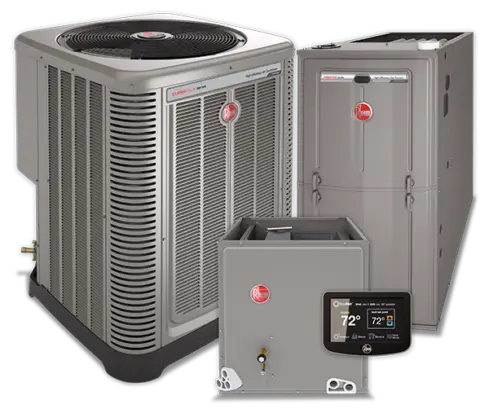
The least expensive system is not always the lowest-cost option over its complete service life. At the same time, the most expensive equipment is not automatically the best value for every home.
Consider:
Initial installed cost
Expected length of ownership
Comfort and humidity priorities
Equipment efficiency
System staging and noise
Existing ductwork and airflow
Warranty coverage
Maintenance requirements
Likely repair costs
Compatibility with zoning or smart controls
Available rebates or incentives
Modern Air of Katy explains the practical differences among appropriate options so you can decide which features matter in your home.
How to Control the Cost of AC Replacement
The goal should not be to find the lowest number at any cost. It should be to avoid unnecessary expenses while obtaining correctly sized equipment and a complete professional installation.
Compare the Complete Scope of Multiple Estimates
Obtaining more than one proposal can help you understand available options. Compare equipment, efficiency, sizing, controls, ductwork, electrical work, drainage, warranties, testing, and contractor responsibilities—not only the total.
Choose Equipment Based on Proper Sizing
Installing unnecessary capacity can increase the purchase price and may cause comfort problems. Selecting equipment that is too small can also lead to poor performance. Appropriate sizing protects both the investment and comfort.
Compare Several Efficiency Levels
Ask for equipment options that make sense for your budget and expected ownership period. The most efficient available system may not produce the best financial return in every home.
Address Only Necessary Modifications
Duct, electrical, drain, platform, or control work should be based on the conditions of the home and requirements of the proposed equipment. A clear written scope helps distinguish necessary improvements from optional upgrades.
Review Current Rebates and Incentives
Manufacturer rebates, utility programs, and government incentives may reduce eligible project costs. Because programs change, confirm current requirements, deadlines, and qualifying equipment before relying on an incentive.
Plan Before an Emergency When Practical
Planned replacement provides more time to compare systems, installation scopes, warranties, and financing. However, age alone does not mean a functioning system must be replaced immediately.
Evaluate Financing Carefully
Financing can make an unexpected replacement more manageable, but compare the interest rate, term, fees, promotional expiration, and total repayment cost—not only the monthly payment.
Protect the New System With Maintenance
Professional maintenance may help identify developing problems and may be required for certain warranty protections. Follow manufacturer instructions and keep maintenance documentation.
Our AC Replacement Process
1. Evaluate the Existing Equipment
We inspect the current system and discuss its age, condition, repair history, efficiency, and performance.
2. Discuss Your Comfort Priorities
We ask about hot rooms, humidity, noise, operating costs, thermostat preferences, budget, and other concerns that should influence the recommendation.
3. Determine the Appropriate Capacity
We use relevant home characteristics and equipment-sizing calculations instead of automatically replacing the system with the same nominal size.
4. Review the Complete System
We consider the indoor and outdoor equipment, ductwork, airflow, refrigerant lines, electrical requirements, drainage, controls, and installation access.
5. Present Replacement Options
We explain appropriate equipment choices, efficiency levels, staging, features, warranty coverage, and installation requirements.
6. Provide a Written Proposal
The proposal identifies the recommended equipment and included work so you can understand what is covered by the price.
7. Install and Test the Equipment
After installation, we start and test the system. Depending on the equipment, this may include verifying temperature performance, airflow, drainage, thermostat response, electrical operation, refrigerant setup, and required system settings.
8. Complete the Homeowner Walkthrough
We explain thermostat operation, filter care, maintenance, warranty registration, and other information relevant to the new equipment.
Why Installation Quality Affects Long-Term Value
Even premium equipment can perform poorly when it is incorrectly sized, restricted by inadequate airflow, improperly configured, or installed without suitable startup testing.
Installation quality can affect:
Cooling capacity
Energy consumption
Indoor humidity
Temperature consistency
Equipment noise
Component life
Reliability
Manufacturer warranty requirements
A lower estimate may not represent better value if it excludes necessary modifications, compatible controls, appropriate testing, or important warranty protections.
Benefits of a Properly Installed New AC System
Depending on the equipment being replaced and the system selected, a new air conditioner may provide:
More Consistent Cooling
Proper sizing and airflow can help maintain steadier temperatures and reduce uncomfortable temperature differences.
Improved Humidity Control
More appropriate cooling cycles may remove moisture more effectively than oversized or poorly operating equipment.
Quieter Operation
New indoor and outdoor equipment may operate more quietly, especially when replacing older or damaged components.
Improved Reliability
Replacing aging equipment can reduce repeated breakdowns and provide more dependable cooling during Houston’s hottest weather.
Potential Energy Savings
A properly sized, higher-efficiency system may reduce cooling costs when replacing older or inefficient equipment. Actual savings depend on the system, installation quality, ductwork, insulation, thermostat settings, weather, utility rates, and household usage.
New Warranty Coverage
New equipment generally includes manufacturer warranty coverage. Registration deadlines, maintenance requirements, exclusions, and labor coverage should be reviewed carefully.
Why Homeowners Choose Modern Air of Katy
Honest Recommendations
We recommend equipment based on your home, comfort priorities, and budget—not simply the highest-priced option.
Repair Before Replacement When Appropriate
A repairable system does not automatically need replacement. We help you evaluate the current repair, overall condition, and likely remaining value before making a major investment.
Proper System Sizing
We consider the home’s cooling requirements instead of relying only on square footage or the size of the previous equipment.
Clear Written Options
We explain equipment differences, installation requirements, warranty coverage, and the work included in the proposal.

Professional Installation and Testing
Our technicians install and test the approved system with attention to airflow, drainage, refrigerant operation, electrical connections, controls, and overall performance.
Local West Houston Service
Modern Air of Katy is based in Spring Branch and serves homeowners throughout West Houston, the Memorial area, and nearby Katy.
Licensed and Insured
Modern Air of Katy is a licensed Texas air-conditioning contractor operating under license TACLA30277E.
Family-Owned • Google Guaranteed • Licensed and Insured • Five-Star Rated
Read Our Customer Reviews
AC Replacement Estimates Across West Houston and Katy
Modern Air of Katy provides residential AC replacement evaluations and installation throughout our primary service area.
Spring Branch
Our Spring Branch location allows us to provide replacement evaluations throughout the surrounding West Houston area.
Explore HVAC services in Spring Branch
Memorial
We provide residential system evaluations, replacement options, and installation throughout Memorial and nearby neighborhoods.
Explore HVAC services in Memorial
Briar Forest, Energy Corridor, and Westchase
Homeowners throughout Briar Forest, the Energy Corridor, and Westchase can request an evaluation for aging, unreliable, or poorly performing equipment.
Memorial Villages
Our service area includes Spring Valley Village, Hedwig Village, Hunters Creek Village, and Bunker Hill Village.
Katy
Modern Air of Katy continues to provide professional AC replacement and installation throughout Katy and nearby communities.
Frequently Asked Questions About AC Replacement Cost
How much does it cost to replace an AC system in Houston?
Many complete residential replacements may cost approximately $6,000 to $12,500, depending on system capacity, equipment efficiency, configuration, installation requirements, and necessary modifications. Premium variable-capacity systems and complex installations can cost $16,000 or more. An in-home evaluation is required for an accurate proposal.
Why can two AC replacement estimates be so different?
The estimates may include different equipment, efficiency levels, warranties, thermostats, duct modifications, electrical work, drainage improvements, refrigerant-line work, permits, labor protections, or testing. Compare the complete scope rather than only the final number.
How long does AC replacement take?
Many standard residential replacements can be completed in one day. Complex access, ductwork, electrical modifications, drainage work, controls, or other installation requirements can require additional time.
Should I replace the indoor and outdoor units together?
Matched indoor and outdoor equipment often provides the best compatibility, rated efficiency, performance, and warranty coverage. The appropriate recommendation depends on the existing equipment’s age, condition, refrigerant type, efficiency, and compatibility.
What size AC system does my home need?
The proper capacity depends on more than square footage. Relevant factors include layout, windows, insulation, air leakage, ceiling height, sun exposure, occupancy, ductwork, airflow, and Houston weather conditions.
Is a higher-efficiency AC worth the additional cost?
It depends on the price difference, expected usage, utility costs, comfort priorities, available incentives, condition of the home and ductwork, and how long you expect to own the property.
Is a two-stage or variable-capacity system worth it?
Staged and variable-capacity systems may provide steadier temperatures, quieter operation, and improved humidity control. Whether those benefits justify the additional cost depends on your home, comfort goals, budget, and ownership plans.
Do I need to replace my ductwork with a new AC?
Not always. Existing ducts may remain when they are appropriately sized, adequately sealed and insulated, and in good condition. Repairs or modifications may be recommended when the ductwork restricts airflow, leaks conditioned air, or contributes to uneven comfort.
Can a new air conditioner lower my electric bill?
A properly sized, higher-efficiency system may use less electricity than older or inefficient equipment. Actual savings depend on installation quality, ductwork, insulation, thermostat settings, weather, utility rates, and household usage.
Are rebates or tax credits available?
Programs change and have eligibility requirements. Confirm current manufacturer, utility, and government program terms and verify that the proposed equipment and installation qualify before relying on a rebate or credit.
Do you provide free AC replacement estimates?
Modern Air of Katy provides free estimates for qualifying AC installation and replacement projects. Contact us to confirm current terms and schedule an in-home evaluation.
Request Your AC Replacement Estimate
Get clear equipment options and a written installation proposal without high-pressure sales. Modern Air of Katy provides professional AC replacement and installation throughout Spring Branch, Memorial, Briar Forest, the Energy Corridor, Westchase, the Memorial Villages, West Houston, and nearby Katy.
Modern Air of Katy — Honest HVAC Service, Done Right
Texas HVAC Contractor License TACLA30277E