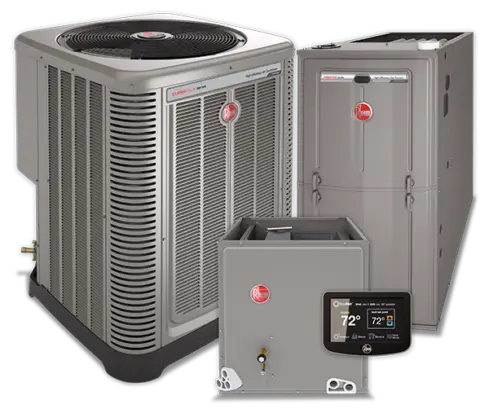
Should you install a heat pump or choose a central air conditioner with a gas furnace?
Houston’s long cooling season and comparatively moderate heating requirements can make a heat pump worth considering, but it is not automatically the best choice for every home. Existing gas service, electrical capacity, equipment condition, ductwork, comfort preferences, installation cost, energy rates, and backup-heat requirements can all affect the decision.
Modern Air of Katy helps homeowners compare heat pumps, gas furnaces, air conditioners, and dual-fuel systems throughout Spring Branch, Memorial, Briar Forest, the Energy Corridor, Westchase, the Memorial Villages, West Houston, Katy, and nearby communities.
We evaluate the complete HVAC system and explain the practical differences without pressuring you to purchase the most expensive option.
Heat pumps • Gas furnaces • Dual-fuel systems • Honest replacement options
The Short Answer: Which System Is Better for Houston?
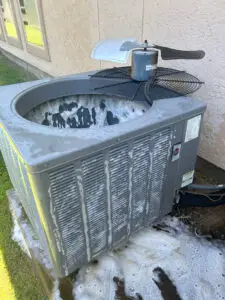
A heat pump can be a practical option for Houston because it provides both cooling and electric heating through the same refrigeration system.
An air conditioner paired with a gas furnace can also be an excellent choice—particularly when the home already has appropriate gas service, venting, electrical connections, ductwork, and compatible indoor equipment.
A dual-fuel system combines a heat pump with a gas furnace. It can use the heat pump during appropriate outdoor conditions and switch to gas heat according to the equipment controls and selected settings.
There is no universal winner. The right choice depends on:
-
Existing HVAC configuration
-
Availability and condition of gas service
-
Electrical-panel and circuit capacity
-
Equipment installation cost
-
Local electricity and natural-gas rates
-
Home heating and cooling requirements
-
Insulation and air leakage
-
Ductwork capacity
-
Comfort preferences
-
Auxiliary or backup-heat requirements
-
Equipment efficiency
-
Warranty coverage
-
Expected ownership period
How a Heat Pump Works
A heat pump uses a refrigeration cycle to transfer heat rather than creating all of its heat through electric resistance or combustion.
Cooling Mode
In cooling mode, a heat pump operates much like a central air conditioner. It absorbs heat from indoor air and releases that heat outdoors.
While cooling, it also removes moisture as air passes across the indoor coil. Cooling capacity, cycle length, airflow, sizing, refrigerant setup, and ductwork all affect temperature and humidity performance.
Heating Mode
In heating mode, the refrigeration cycle reverses. The outdoor unit absorbs available heat from the outside air, and the indoor coil releases that heat into the home.
Outdoor air does not have to feel warm to contain transferable heat. However, heat-pump capacity and efficiency can change as outdoor temperatures fall.
Auxiliary Electric Heat
Many ducted heat-pump systems include electric auxiliary heating elements inside the air handler.
Auxiliary heat may operate when:
-
Outdoor conditions reduce heat-pump capacity
-
The thermostat setting is raised substantially
-
The system is recovering from a setback
-
The heat pump enters a defrost cycle
-
The home requires more heat than the compressor can currently provide
-
Emergency-heat mode is selected
Electric resistance heat can provide needed supplemental capacity, but extended auxiliary-heat operation may materially affect electricity use.
Correct equipment sizing, thermostat configuration, staging, controls, and electrical capacity are important.
How an AC and Gas Furnace System Works
A traditional split system combines:
-
An outdoor central air conditioner
-
An indoor evaporator coil
-
A gas furnace
-
A blower
-
Thermostat and controls
-
Supply and return ductwork
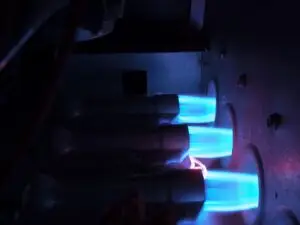
The air conditioner provides cooling during warm weather. The gas furnace burns natural gas to produce heat during heating operation.
The furnace blower normally circulates air for both heating and cooling, so furnace selection affects more than winter comfort. Blower capability, evaporator-coil compatibility, airflow, equipment dimensions, controls, and ductwork should be considered together.
Gas-furnace installation may also involve:
-
Gas supply and shutoff
-
Combustion air
-
Venting
-
Condensate drainage for applicable furnaces
-
Electrical service
-
Thermostat wiring
-
Equipment clearances
-
Safety controls
-
Air-conditioner and coil compatibility
Learn about furnace installation and replacement in Houston.
How a Dual-Fuel HVAC System Works
A dual-fuel system pairs a heat pump with a gas furnace.
The heat pump can provide cooling and moderate-weather heating. During colder conditions—or when determined by the selected control strategy—the system can switch to the gas furnace.
Depending on the equipment and controls, changeover may consider:
-
Outdoor temperature
-
Indoor demand
-
Equipment capacity
-
Operating-cost settings
-
Compressor staging
-
Manufacturer control logic
-
Homeowner-selected preferences
Dual fuel can provide flexibility, but it adds equipment and control complexity.
It may require:
-
Compatible heat pump
-
Compatible gas furnace
-
Matched indoor coil
-
Appropriate thermostat or communicating control
-
Outdoor-temperature information
-
Correct staging and changeover settings
-
Suitable gas, electrical and venting infrastructure
-
Proper airflow and ductwork
The additional installation cost should be compared with the expected comfort and operating benefits. Dual fuel is not automatically necessary simply because both electricity and natural gas are available.
Is a Heat Pump Good for Houston?
A heat pump may be well suited to a Houston home because heating demand is generally lower than cooling demand and many winter hours occur under conditions where heat pumps can operate effectively.
However, suitability still depends on the individual home.
A heat pump may deserve consideration when:
-
The home does not have natural-gas service
-
The homeowner prefers an all-electric system
-
Existing equipment already uses a heat pump
-
Electrical service can support the proposed system
-
The home has appropriate ductwork and airflow
-
The equipment is correctly sized
-
Auxiliary-heat requirements have been considered
-
The installation cost fits the budget
-
Available efficiency and comfort features provide useful value
A gas furnace may remain appropriate when:
-
The home already has usable gas infrastructure
-
Existing venting can be used or modified appropriately
-
The homeowner prefers gas heating
-
The furnace and air conditioner configuration fits the home
-
Electrical upgrades for auxiliary heat would be expensive
-
Gas and electricity cost comparisons favor the proposed system
-
The furnace provides practical backup during colder conditions
-
Existing ductwork and equipment access support the installation
The decision should be based on the complete project rather than Houston’s climate alone.
Heating Performance During Houston Cold Fronts
Houston winters are relatively moderate, but strong cold fronts can produce periods of significant heating demand.
Heat-Pump Performance
Heat-pump capacity and efficiency vary according to outdoor temperature and equipment design. Some systems maintain greater capacity at lower temperatures than others.
When heating demand exceeds available compressor capacity, compatible auxiliary heat may operate.
The installer should evaluate:
-
Heating capacity at relevant outdoor conditions
-
Home heating load
-
Auxiliary-heat size
-
Electrical requirements
-
Thermostat and staging controls
-
Defrost operation
-
Duct airflow
-
Manufacturer performance data
Gas-Furnace Performance
A gas furnace produces heat through combustion and can provide high-temperature supply air when correctly sized and operating properly.
Larger output is not automatically better. An oversized furnace may create short cycles, temperature swings, excessive noise, and uneven comfort.
Dual-Fuel Performance
Dual fuel allows the system to use heat-pump heating under selected conditions and gas heat when controls call for the furnace.
The value of this flexibility depends on equipment cost, utility rates, heating demand, control settings, and homeowner priorities.
Comfort and Supply-Air Temperature
Heat pumps and gas furnaces can feel different during heating operation.
A heat pump often supplies air at a lower temperature than a gas furnace but may operate for longer periods. Longer cycles are not automatically a malfunction if the system maintains the thermostat setting and operates according to its design.
A gas furnace generally supplies warmer air during the heating cycle. Some homeowners prefer that sensation, although equipment staging and blower configuration also affect comfort.
Comfort depends on more than supply-air temperature. It may also be affected by:
-
Equipment sizing
-
Operating stages
-
Airflow settings
-
Duct design
-
Return-air capacity
-
Insulation
-
Air leakage
-
Thermostat location
-
Zoning
-
Room layout
-
Window exposure
Neither system can compensate fully for severely damaged ductwork or major building-envelope problems.
Cooling and Humidity Performance
Because Houston homes use cooling for much of the year, summer performance may be more important than the difference between heating methods.
Both a heat pump and central air conditioner use a refrigeration cycle for cooling.
Cooling and humidity performance may depend on:
-
System capacity
-
Single-stage, two-stage or variable-capacity operation
-
Equipment sizing
-
Indoor airflow
-
Refrigerant setup
-
Duct leakage
-
Return-air capacity
-
Thermostat controls
-
Cooling-cycle length
-
Home air leakage
-
Outdoor humidity
-
Indoor moisture sources
An oversized system may cool the home quickly and shut off before removing enough moisture. The proposed equipment should be sized and configured for the home—not selected only by matching the capacity of the old system.
Installation-Cost Differences
Heat-pump versus gas-furnace cost cannot be compared accurately from the equipment price alone.
Heat-Pump Installation May Include
-
Outdoor heat-pump unit
-
Indoor air handler
-
Electric auxiliary heat
-
Indoor coil
-
Refrigerant lines or modifications
-
Electrical disconnect
-
Air-handler circuit
-
Auxiliary-heat circuit
-
Thermostat or communicating control
-
Condensate drainage
-
Equipment platform
-
Duct transitions
-
Supply and return modifications
-
Startup and system configuration
AC and Gas-Furnace Installation May Include
-
Outdoor air conditioner
-
Indoor evaporator coil
-
Gas furnace
-
Gas piping or modifications
-
Furnace venting
-
Combustion-air requirements
-
Electrical connections
-
Thermostat or controls
-
Condensate drainage
-
Equipment platform
-
Duct transitions
-
Supply and return modifications
-
Startup and system configuration
Dual-Fuel Installation May Include
A dual-fuel installation may combine many of the requirements of both systems, along with compatible changeover controls.
Two estimates may have similar equipment descriptions but include different:
-
Efficiency levels
-
Equipment stages
-
Thermostats
-
Electrical work
-
Gas or venting work
-
Ductwork modifications
-
Drainage improvements
-
Refrigerant-line work
-
Warranties
-
Permits
-
Testing
-
Labor protections
Compare the complete scope rather than only the total price.
Review the factors affecting AC replacement cost in Houston.
Operating Costs: Electricity Versus Natural Gas
It is not accurate to say that a heat pump or gas furnace always costs less to operate.
Operating cost depends on:
-
Current electricity rates
-
Current natural-gas rates
-
Heat-pump efficiency
-
Furnace efficiency
-
Outdoor temperature
-
Auxiliary-heat usage
-
Equipment sizing
-
Duct leakage
-
Home insulation
-
Thermostat settings
-
Heating schedule
-
Household comfort preferences
-
Maintenance and equipment condition
A heat pump transfers heat and can deliver more heat energy than the electrical energy directly consumed by its compressor under many operating conditions. However, performance changes with temperature, and electric auxiliary heat has a different operating profile.
Gas-furnace efficiency is commonly expressed as AFUE. Heat-pump heating efficiency may be compared using HSPF2 and equipment performance data, while cooling performance may be compared using SEER2 and EER2 ratings.
Efficiency ratings are useful comparison tools, but they do not guarantee a specific utility bill.
When evaluating operating costs, use current local energy rates and equipment-specific performance information rather than broad claims.
Gas-Service, Venting and Combustion Considerations
A gas furnace requires an appropriate fuel supply and safe management of combustion gases.
Installation planning may involve:
-
Available gas service
-
Gas-line size and condition
-
Shutoff valve and connector
-
Gas pressure
-
Vent material and routing
-
Vent termination
-
Combustion air
-
Furnace location and clearances
-
Condensate handling for applicable equipment
-
Carbon-monoxide alarms
-
Manufacturer requirements
-
Applicable codes
Do not assume existing gas piping or venting is automatically suitable for replacement equipment.
Important Gas Safety
If you smell gas:
-
Leave the building immediately.
-
Do not operate switches, appliances or electrical equipment.
-
Do not use a phone while inside.
-
Contact the gas utility or emergency services from a safe location.
If a carbon-monoxide alarm sounds, move everyone into fresh air and call 911 or the local fire department. Do not reenter until emergency personnel say it is safe.
Electrical-Service Considerations
Heat pumps, air handlers and electric auxiliary heat require appropriate electrical service.
An all-electric conversion may require evaluation of:
-
Main electrical-service capacity
-
Available panel space
-
Circuit and breaker sizes
-
Wiring
-
Disconnects
-
Air-handler requirements
-
Auxiliary-heat capacity
-
Local requirements
-
Equipment manufacturer specifications
A home with an existing gas furnace may not have the electrical capacity needed for large electric heating elements without modification.
Electrical work can significantly affect the project scope, so it should be considered before selecting an all-electric system.
Maintenance and Repair Considerations
Both heat pumps and gas furnaces require appropriate professional service.
Heat-Pump Maintenance May Include
-
Air-filter inspection
-
Indoor and outdoor coil condition
-
Refrigerant-related performance
-
Electrical components
-
Blower operation
-
Reversing-valve operation
-
Defrost controls
-
Auxiliary-heat operation
-
Drainage
-
Thermostat configuration
-
Airflow
Because a heat pump operates during both cooling and heating seasons, the refrigeration system may accumulate more annual operating hours than cooling-only equipment.
Gas-Furnace Maintenance May Include
-
Filter and airflow
-
Ignition components
-
Flame sensing
-
Burners
-
Gas and combustion conditions
-
Heat-exchanger observations
-
Inducer operation
-
Pressure switches
-
Safety controls
-
Venting
-
Electrical components
-
Blower operation
-
Thermostat response
Maintenance cannot prevent every breakdown or guarantee a particular lifespan for either system.
Learn about heating-system maintenance in West Houston and Katy.
Equipment Lifespan
Avoid choosing a system based on a universal lifespan claim.
Equipment longevity can be influenced by:
-
Installation quality
-
Equipment sizing
-
Annual operating hours
-
Airflow
-
Duct condition
-
Maintenance
-
Electrical conditions
-
Refrigerant setup
-
Outdoor environment
-
Drainage
-
Component quality
-
Thermostat settings
-
Repair history
A gas furnace may operate fewer annual hours in Houston because it is used only for heating, while a heat-pump outdoor unit normally operates during both heating and cooling. However, this does not guarantee that one type will always last longer than the other.
Compare warranty protection, expected usage, parts availability, serviceability, and complete system design.
Ductwork and Airflow Requirements
Both heat pumps and gas furnaces depend on appropriate supply and return airflow.
Duct problems may include:
-
Undersized supply ducts
-
Inadequate return-air capacity
-
Disconnected ducts
-
Crushed flexible ducts
-
Excessive duct length
-
Damaged insulation
-
Poor layout
-
Excessive static pressure
-
Leakage into or from the attic
-
Closed or damaged dampers
Replacing equipment without correcting serious duct restrictions may result in noise, uneven comfort, poor performance, or equipment problems.
Existing ductwork does not automatically require replacement. It may remain suitable when it is appropriately sized, sealed, insulated, supported, and in serviceable condition.
Thermostat and Control Compatibility
The thermostat must support the selected equipment and functions.
Compatibility considerations may include:
-
Conventional versus heat-pump wiring
-
Reversing-valve control
-
Compressor stages
-
Furnace stages
-
Auxiliary and emergency heat
-
Dual-fuel changeover
-
Variable-speed or variable-capacity equipment
-
Communicating controls
-
Outdoor-temperature information
-
Humidity-control accessories
-
HVAC zoning
-
Available thermostat conductors
-
Common-wire requirements
A universal smart thermostat may not preserve every feature of proprietary or communicating equipment.
Learn about professional thermostat installation in Houston.
Which System May Be Right for Your Home?
A Heat Pump May Make Sense When:
-
You prefer an all-electric HVAC system
-
Natural-gas service is unavailable or undesirable
-
Electrical capacity supports the proposed equipment
-
The home’s heating and cooling loads are appropriate
-
Auxiliary-heat needs have been planned
-
Existing ductwork supports required airflow
-
The installation cost fits your budget
-
Equipment efficiency and comfort features provide useful value
An AC and Gas Furnace May Make Sense When:
-
The home already has suitable gas infrastructure
-
Existing venting can be used or modified appropriately
-
The homeowner prefers gas heating
-
Electrical upgrades for auxiliary heat would be substantial
-
The furnace and AC configuration fits the home
-
Gas and electricity comparisons support the choice
-
The complete installation scope provides good value
Dual Fuel May Make Sense When:
-
The homeowner wants heat-pump heating and gas backup
-
The equipment and controls are fully compatible
-
Existing gas infrastructure is usable
-
The added equipment and control cost is justified
-
The operating strategy suits local energy prices
-
The homeowner values the flexibility of two heating sources
Dual fuel may not provide enough additional benefit for every Houston home. Compare the added cost and complexity with realistic usage.
Questions to Ask Before Choosing
Before selecting a heat pump, gas furnace or dual-fuel system, ask:
-
What are the home’s heating and cooling requirements?
-
How was the proposed equipment size determined?
-
What equipment is being replaced?
-
Can any existing components be reused appropriately?
-
Is the proposed indoor and outdoor equipment matched?
-
Does the ductwork support the required airflow?
-
Is electrical-panel or circuit work required?
-
Is gas-piping or venting work required?
-
What auxiliary heat is included?
-
How will a dual-fuel system change between heat sources?
-
What efficiency ratings apply?
-
Which thermostat or control is included?
-
What manufacturer warranty applies?
-
What labor protection applies?
-
What maintenance is required?
-
What work is excluded from the estimate?
-
Are current rebates, tax credits or utility programs available?
-
Who is responsible for verifying eligibility for incentives?
-
What testing will be completed after installation?
-
How will the system manage Houston humidity during cooling?
Incentive programs and eligibility requirements can change. Confirm current terms through the applicable government agency, utility, manufacturer or tax professional before relying on an incentive in your purchasing decision.
Frequently Asked Questions
Is a heat pump good for Houston?
A heat pump may be appropriate because it can provide both cooling and electric heating. Suitability depends on the home’s heating and cooling loads, electrical service, ductwork, auxiliary-heat requirements, installation cost, efficiency, and comfort goals.
Is a gas furnace necessary in Houston?
No. Many homes can use heat pumps or electric heating systems. Other homeowners choose gas furnaces because of existing infrastructure, comfort preference, operating-cost considerations, or equipment configuration.
Which costs less to operate: a heat pump or gas furnace?
The answer depends on current electricity and gas prices, equipment efficiency, outdoor temperature, auxiliary-heat usage, thermostat settings, ductwork, insulation, and household usage.
Does a heat pump replace both the AC and furnace?
A heat pump provides both cooling and heating through its refrigeration system, but a ducted installation also requires compatible indoor equipment, a blower, controls, ductwork, and often auxiliary electric heat. It does not eliminate the need for all indoor HVAC components.
Does a heat pump work during freezing weather?
Yes, heat pumps can operate below freezing, but available capacity and efficiency depend on the specific equipment and outdoor conditions. Auxiliary heat may operate when additional capacity is required.
Is gas-furnace air warmer than heat-pump air?
Gas furnaces generally produce warmer supply air during operation. Heat pumps often deliver lower-temperature air over longer cycles. Correctly sized equipment of either type should be evaluated according to overall comfort and performance.
Do heat pumps require more maintenance?
Heat pumps and gas furnaces have different components and service needs. Because a heat pump operates during cooling and heating seasons, its refrigeration system may accumulate more annual operating hours. Neither system is maintenance-free.
Will a heat pump lower my utility bills?
It may reduce energy costs in some homes and operating conditions, but savings cannot be guaranteed. Energy rates, equipment efficiency, auxiliary-heat usage, ductwork, insulation, thermostat settings, and household usage all matter.
Is dual fuel worth it in Houston?
It may be valuable for homeowners who want heat-pump operation plus gas backup. Whether it is worth the additional cost and complexity depends on equipment pricing, utility rates, comfort goals, existing infrastructure, and expected heating usage.
Do I need new ductwork?
Not automatically. Existing ductwork may be reused when it is appropriately sized, sealed, insulated, supported, and in suitable condition. Repair or modification may be recommended when airflow, leakage, sizing, or damage problems are present.
Should I replace my working furnace when replacing the AC?
Not always. Consider furnace condition, age, blower compatibility, evaporator coil, efficiency, controls, refrigerant requirements, warranty coverage, installation access, and the cost of replacing components separately.
Read our guide about whether to repair or replace your furnace.
Compare Heat-Pump and Gas-Furnace Options
Modern Air of Katy evaluates your existing equipment, home comfort needs, heating and cooling requirements, ductwork, electrical service, gas infrastructure, controls, efficiency goals, and budget before recommending a replacement system.
We provide residential HVAC replacement evaluations throughout Spring Branch, Memorial, Briar Forest, the Energy Corridor, Westchase, the Memorial Villages, West Houston, Katy, and nearby communities.
Explore AC installation and replacement in Houston, review furnace installation options, or contact Modern Air of Katy to discuss your home.
Modern Air of Katy — Honest HVAC Service, Done Right
Texas HVAC Contractor License TACLA30277E