
Houston’s long cooling season, high humidity, attic heat, airborne debris, and occasional winter cold snaps place year-round demands on residential heating and cooling equipment. Regular attention can help the system operate as intended and may reveal developing problems before they cause an unexpected loss of comfort.
This HVAC maintenance guide explains what Houston homeowners can safely check, what professional maintenance commonly includes, how cooling and heating visits differ, and when a performance change deserves repair rather than routine maintenance.
Modern Air of Katy serves Spring Branch, Memorial, Briar Forest, the Energy Corridor, Westchase, the Memorial Villages, West Houston, nearby Katy, and surrounding communities.
Need professional service?
Why HVAC Maintenance Matters in Houston
Homes in the Houston area face:
Extended summer heat
High indoor humidity
Heavy AC usage
Attic heat exposure
Condensation buildup
Without regular maintenance, systems lose efficiency and are more likely to fail during peak demand.
Professional HVAC maintenance in Houston helps protect your system from costly emergency breakdowns.
How Often Should HVAC Systems Be Serviced?
For many Houston homes, professional service twice per year is a practical schedule:
Cooling maintenance in spring: Inspect the air-conditioning system before the period of heaviest use.
Heating maintenance in fall: Check the furnace or heat pump before regular winter operation.
The appropriate schedule can vary with equipment type, manufacturer instructions, system age, operating hours, household conditions, and warranty terms. Homes with pets, renovation dust, heavy system use, difficult drainage conditions, or recurring performance problems may require more frequent homeowner attention or professional inspection.
Review your equipment documentation and any applicable warranty terms. Maintenance requirements and recordkeeping expectations vary among manufacturers and products.
Monthly Homeowner HVAC Maintenance Checklist
These simple observations can help you notice changes between professional visits. Only perform tasks that are safely accessible and allowed by the equipment manufacturer.
Check the Air Filter
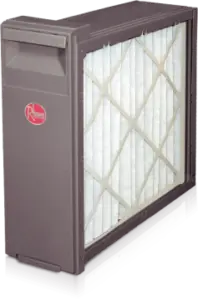
Inspect the filter regularly and replace or clean it according to its condition, the manufacturer’s instructions, and your home’s needs. A filter may require more frequent attention when the system operates heavily or the home has pets, construction dust, smoke, or other airborne particles.
Use the correct dimensions and an appropriate filter type. A filter with excessive resistance can reduce airflow even when it appears clean.
Check the Thermostat
Confirm that the thermostat displays a reasonable indoor temperature, follows the intended schedule, and responds when you change the setting.
If the screen is blank, the system does not respond, or room temperatures differ substantially from the display, the issue may involve batteries, wiring, a transformer, a safety switch, equipment power, or the thermostat itself.
Learn about professional thermostat installation
Look at Supply and Return Vents
Make sure furniture, rugs, boxes, and other household items do not block accessible supply registers or return-air grilles. Avoid closing multiple supply vents in an attempt to force air elsewhere because that can alter system airflow and pressure.
Persistent weak airflow or uneven temperatures may point to the filter, blower, coil, ductwork, return-air capacity, dampers, insulation, or system design.
Watch for Water or Ice
Look for water around the indoor equipment, drain pan, nearby ceiling, or floor. Ice on the refrigerant line or equipment is not normal and should not be removed with tools or direct heat.
If you see water or ice, turn cooling off when necessary to protect the equipment and home, then arrange an inspection.
Listen and Smell
Pay attention to new buzzing, grinding, rattling, repeated clicking, electrical odors, burning smells, or musty odors. Turn the equipment off and request service when you see sparks, smell burning, experience repeated breaker trips, or hear severe mechanical noise.
Check the Outdoor Unit
Keep leaves, weeds, stored items, and loose debris away from the outdoor equipment. Preserve the clearance required by the manufacturer and avoid enclosing the unit with fencing or vegetation that restricts airflow.
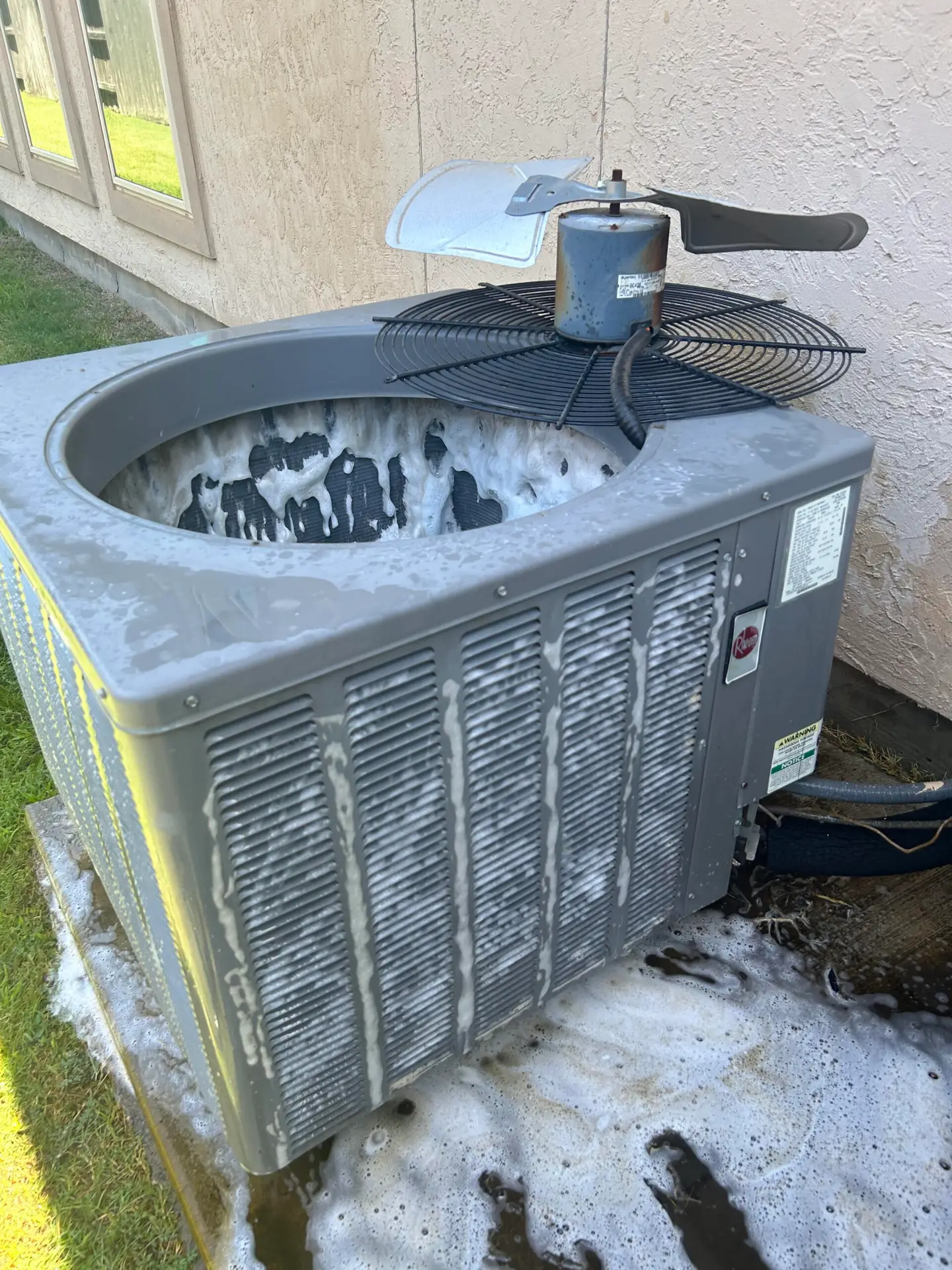
Do not pressure-wash the coil, open electrical panels, handle the disconnect, reach through the grille, or attempt to replace capacitors.
Spring and Summer AC Maintenance Checklist
Before Houston’s heaviest cooling demand begins:
Install the correct clean filter when replacement is needed
Confirm that the thermostat enters cooling mode
Check accessible supply and return openings for obstructions
Look for water, drain-pan moisture, or signs of previous overflow
Clear loose debris and vegetation around the outdoor unit
Observe whether the outside fan starts normally
Listen for new buzzing, rattling, clicking, or grinding
Note any room that remains consistently warmer
Schedule professional AC maintenance before peak demand when practical
If the air conditioner is already failing to cool, leaking, freezing, or repeatedly tripping a breaker, it needs diagnosis rather than a routine tune-up.
Fall and Winter Heating Maintenance Checklist
Before regular heating operation:
Install the correct clean filter when needed
Confirm that the thermostat enters heating mode
Make sure accessible supply and return openings are unobstructed
Listen for unusual startup or blower noises
Pay attention to persistent odors after initial operation
Confirm that the system heats the home evenly
Check that carbon-monoxide alarms are installed and functioning according to their manufacturer’s instructions
Schedule professional furnace or heat-pump maintenance before cold weather when practical
A brief dusty odor may occur when heating equipment first operates after a long idle period. Persistent burning, electrical, fuel, or exhaust odors require prompt attention. Leave the home and contact emergency services or the appropriate utility if you suspect a gas leak or carbon-monoxide emergency.
Learn about heating maintenance and tune-ups
If the system is malfunctioning rather than due for routine service, explore furnace repair in Houston.
.
What Professional AC Maintenance May Include
The exact tasks depend on the equipment, accessibility, condition, manufacturer instructions, and scope of service. A professional cooling-maintenance visit may include applicable work such as:
Reviewing thermostat operation and cooling settings
Inspecting the filter and accessible airflow conditions
Checking electrical connections and components
Evaluating capacitors, contactors, motors, and controls
Inspecting accessible indoor and outdoor coils
Checking the condenser fan and blower operation
Inspecting condensate drains, pans, pumps, and safety switches
Measuring relevant operating temperatures
Evaluating refrigerant performance when appropriate
Looking for abnormal noise, heat, vibration, or visible deterioration
Checking accessible refrigerant-line insulation
Reviewing overall cooling operation
Refrigerant should not be added simply because maintenance is being performed. Air conditioners do not normally consume refrigerant. If the charge appears low, the reason should be evaluated.
What Professional Heating Maintenance May Include
Heating maintenance differs depending on whether the home uses a gas furnace, electric furnace, heat pump, or another system. Applicable work may include:
Checking thermostat and heating-control operation
Inspecting electrical connections and controls
Evaluating the blower and airflow
Inspecting accessible heating components
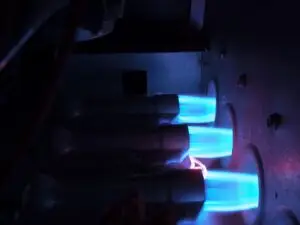
Checking ignition and flame operation on applicable gas equipment
Inspecting safety controls and limit operation
Observing venting and combustion-related components that are within the service scope
Checking heat-pump operation and defrost-related controls when applicable
Looking for abnormal noise, odor, heat, or visible deterioration
Confirming the system starts, runs, and shuts down normally
No visual inspection or tune-up can guarantee that equipment will never fail. Safety concerns and abnormal findings should be explained clearly so the homeowner can decide what work to authorize.
Air Filters: Size, Type, and Replacement Frequency
The air filter protects HVAC components and captures particles as air returns to the equipment. The best replacement interval is not identical for every home.
Filter life may be affected by:
Filter dimensions and design
Equipment runtime
Number of occupants
Pets
Smoking or candles
Remodeling or construction dust
Indoor particle levels
Return-air configuration
Manufacturer instructions
Higher filtration is not automatically better for every system. A filter that creates too much resistance can reduce airflow, increase noise, affect comfort, and contribute to coil icing. Choose a filter that suits the equipment and household needs.
For broader filtration, humidity, and particle concerns, explore indoor air quality solutions in Houston.
Condensate Drain Maintenance in Houston’s Humidity
During cooling operation, the evaporator coil removes moisture from indoor air. That water must flow through a drain line or condensate pump.
Algae, dirt, debris, damaged pans, improper slope, pump failure, or disconnected piping can cause drainage problems. Some systems use float switches that shut cooling off when water rises, helping reduce the risk of property damage.
Warning signs include:
Water around the furnace or air handler
Moisture in an auxiliary drain pan
Water stains on ceilings or walls
A musty odor near the equipment
Cooling that stops unexpectedly
A condensate pump that runs continuously or does not operate
Do not bypass a float switch to force the system to run. The drainage problem should be identified and corrected.
Outdoor AC Unit Care
The outdoor condenser needs adequate airflow to release heat. Homeowners can help by keeping the surrounding area reasonably clear of vegetation, leaves, grass clippings, and stored objects.
Avoid:
Covering an operating unit
Building a tight enclosure around it
Directing lawn equipment toward wiring or refrigerant tubing
Bending coil fins
Pressure-washing the coil
Opening electrical panels
Reaching through the grille
Pushing a stopped fan blade
If the indoor blower operates but the condenser remains silent, hums without starting, or runs without its fan, turn cooling off and review why an outside AC unit may not be running.
How Ductwork and Airflow Affect HVAC Performance
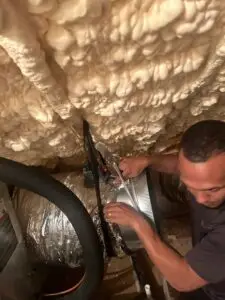
Maintenance of the heating and cooling equipment cannot correct every comfort problem. Leaking, damaged, crushed, poorly insulated, or restrictive ductwork may waste conditioned air or prevent the intended airflow from reaching certain rooms.
Possible duct or airflow symptoms include:
Rooms that remain warmer or colder than the rest of the home
Weak airflow from certain vents
Excessive return-air noise
Long operating cycles
Dust or attic odors from vents
Visible damaged or disconnected ducts
Temperature differences following remodeling or additions
The cause may also involve insulation, air leakage, windows, dampers, zoning, blower settings, or equipment sizing. The complete comfort system should be evaluated before assuming larger equipment is needed.
DIY HVAC Maintenance vs. Professional Service
Homeowners can often safely:
Replace or clean an accessible filter
Keep accessible vents unobstructed
Check basic thermostat settings
Observe whether equipment starts normally
Keep loose debris away from the outdoor unit
Watch for water, ice, odors, or unusual noise
Keep a record of maintenance and repairs
Professional service is appropriate for:
Electrical testing
Capacitor, contactor, transformer, or control work
Refrigerant-system evaluation
Coil cleaning requiring equipment access or specialty methods
Blower or motor diagnosis
Condensate blockages that cannot be addressed safely
Combustion and heating-safety checks
Persistent airflow or comfort problems
Repeated breaker trips
Equipment that will not start, cool, or heat properly
Do not open electrical panels, bypass safety switches, handle refrigerant, adjust gas components, or continue resetting a breaker that trips repeatedly.
Maintenance or Repair: Which Service Do You Need?
Maintenance is intended for equipment that is operating and needs inspection, cleaning, and applicable performance checks. Repair is intended to diagnose and correct an existing malfunction.
Schedule repair when:
The system will not turn on
The AC runs but does not cool
Warm air comes from the vents
Ice appears on the equipment
Water is leaking or overflowing
A breaker trips repeatedly
The outdoor unit does not operate
The furnace does not heat
Burning or electrical odors are present
Severe or new mechanical noise occurs
Related resources:
Signs Your HVAC System Needs Professional Attention
Arrange professional service when you notice:
Cooling or heating performance changes suddenly
The equipment runs continuously without maintaining temperature
Airflow becomes weak or uneven
The system starts and stops unusually often
Ice or water appears around the equipment
A breaker trips more than once
The thermostat becomes blank or unresponsive
New buzzing, grinding, rattling, or repeated clicking occurs
Burning, electrical, gas, or exhaust odors are present
Indoor humidity becomes persistently uncomfortable
Energy use changes substantially without an obvious explanation
These symptoms do not reveal the failed component by themselves. Diagnosis should come before parts replacement or a recommendation for new equipment.
Can HVAC Maintenance Reduce Operating Costs?
Maintenance may help equipment operate as intended by addressing dirty components, drainage restrictions, airflow concerns, loose connections, and certain performance problems.
However, no tune-up can guarantee a specific energy bill. Actual consumption and cost also depend on:
Equipment efficiency and condition
System sizing
Duct leakage and insulation
Home insulation and air sealing
Thermostat settings
Outdoor weather
Utility rates
Occupancy and household usage
Windows, sun exposure, and internal heat sources
A sudden or unexplained change in energy use may justify an equipment and home-performance evaluation.
Does HVAC Maintenance Protect the Warranty?
Warranty terms vary by manufacturer, product, registration status, installation, and coverage type. Some warranties may require maintenance or documentation, but the exact requirements should be confirmed from the written warranty rather than assumed.
Keep records of:
Equipment model and serial numbers
Warranty registration
Installation documents
Maintenance visits
Repair invoices
Parts replaced
Dates and descriptions of reported problems
Maintenance does not guarantee that a future repair will be covered. Manufacturer parts warranties may also exclude labor, diagnostics, refrigerant, shipping, or other expenses.
Should You Join an HVAC Maintenance Plan?
A maintenance plan may be useful for homeowners who want recurring seasonal service, priority scheduling, repair discounts, or other included benefits. Compare the actual plan terms rather than relying only on the monthly or annual price.
Questions to ask include:
How many visits are included?
Which equipment is covered?
What inspection and maintenance tasks are included?
Are filters, parts, refrigerant, or cleaning services included or separate?
What repair discounts apply?
How does priority scheduling work during peak demand?
Does the agreement renew automatically?
Can the plan be transferred or canceled?
HVAC Maintenance Throughout West Houston and Katy
Modern Air of Katy is based in Spring Branch and serves homeowners throughout:
Spring Branch
Memorial
Briar Forest
Energy Corridor
Westchase
Spring Valley Village
Hedwig Village
Hunters Creek Village
Bunker Hill Village
Katy
Service may also be available in Cypress, Sugar Land, and other nearby communities depending on scheduling.
Frequently Asked Questions About HVAC Maintenance
How often should an HVAC system be serviced in Houston?
For many Houston homes, professional cooling maintenance in spring and heating maintenance in fall is a practical schedule. The appropriate frequency depends on equipment type, age, usage, household conditions, manufacturer instructions, and applicable warranty terms.
Can HVAC maintenance prevent breakdowns?
Maintenance cannot prevent every failure. It may identify certain weak components, drainage problems, airflow restrictions, loose connections, dirty equipment, or abnormal operation before they cause an unexpected shutdown.
Can maintenance lower my energy bills?
Maintenance may help equipment operate as intended when dirt, airflow, drainage, electrical, or control problems are affecting performance. Actual savings are not guaranteed and depend on the equipment, home, weather, thermostat settings, utility rates, and usage.
How often should I change the HVAC filter?
There is no single interval for every home. Inspect it regularly and follow the filter and equipment manufacturers’ instructions. Pets, dust, smoke, construction, filter size, filter type, and system runtime can change how quickly it loads.
Should I clean my outdoor AC coil myself?
Keep loose debris and vegetation away from the unit, but avoid pressure washing, harsh chemicals, electrical areas, or methods that could bend fins or damage coatings. Professional cleaning should be based on the coil’s condition and equipment requirements.
Does HVAC maintenance include refrigerant?
Maintenance may include evaluating cooling performance and the refrigerant circuit when appropriate, but refrigerant should not be added automatically. Low refrigerant may indicate a leak or earlier charging problem that requires diagnosis.
Is maintenance required for warranty coverage?
Requirements vary. Review the written manufacturer and labor-warranty terms for your equipment. Keep maintenance and repair documentation in case proof is requested.
What is the difference between an HVAC tune-up and repair?
A tune-up or maintenance visit is for equipment that is operating and needs scheduled inspection and applicable service. A repair visit diagnoses an existing failure such as no cooling, no heat, leaking water, icing, unusual noise, or equipment that will not start.
Can I maintain my HVAC system myself?
Homeowners can usually handle filters, accessible vents, thermostat settings, basic observations, and outdoor housekeeping. Electrical, refrigerant, combustion, motor, internal cleaning, and safety-control work should be handled by a qualified professional.
When is the best time to schedule HVAC maintenance?
Scheduling cooling maintenance before peak summer demand and heating maintenance before regular winter use can provide more time to address problems. Maintenance can still be performed at other times when scheduling and weather permit.
Schedule Professional HVAC Maintenance
Regular maintenance can help you understand your equipment’s condition, identify certain developing problems, and prepare the system for periods of heavy use.
Modern Air of Katy provides residential HVAC maintenance throughout Spring Branch, Memorial, West Houston, Katy, and nearby communities.
Explore your service options:
Modern Air of Katy — Honest HVAC Service, Done Right
Texas HVAC Contractor License TACLA30277E