
Is your air conditioner covered in ice, blowing little air, or running without cooling your home? A frozen AC unit usually indicates an airflow, refrigerant, or equipment problem—not that the system is producing extra-cold air.
Modern Air of Katy diagnoses and repairs frozen air conditioners throughout Spring Branch, Memorial, Briar Forest, the Energy Corridor, Westchase, the Memorial Villages, and nearby Katy. We identify why the system froze, explain the available repair options, and recommend only the work your equipment needs.
Same-day appointments frequently available • Honest diagnostics • Upfront repair options • Local West Houston service
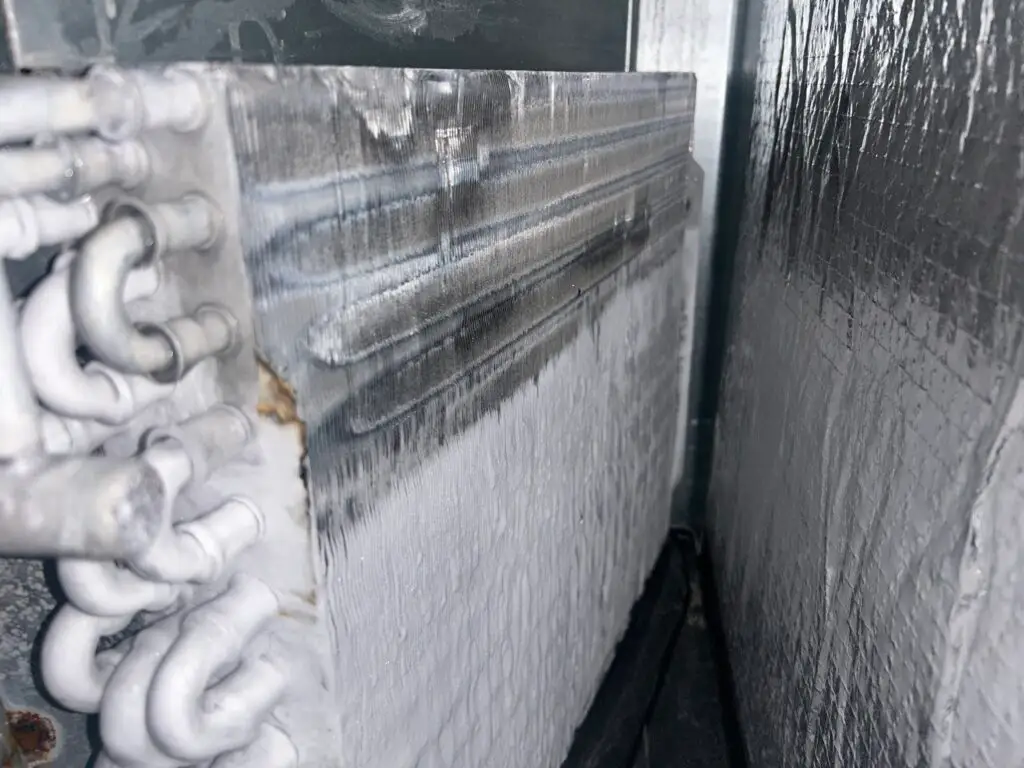
Turn the cooling system off when you see ice on the indoor coil, copper refrigerant line, or outdoor equipment. Continuing to run a frozen air conditioner can prevent the ice from melting and may place additional strain on the compressor.
Take these safe steps while arranging service:
Set the thermostat from “Cool” to “Off.” This stops the outdoor cooling equipment.
Set the fan to “On” if it is still moving air. Room-temperature air may help the ice thaw. If the blower is not operating, leave the system off.
Check the air filter. Replace a severely dirty filter with the correct size and type, but do not restart the cooling system while ice remains.
Protect the area from water. Melting ice can overwhelm the drain system or leak around the indoor equipment.
Do not remove ice with tools or heat. Sharp objects can puncture the evaporator coil, and direct heat can damage equipment.
Schedule professional diagnosis. The system may begin cooling again after thawing, but it can freeze again until the underlying cause is corrected.
Thawing may take several hours. A technician usually cannot fully test a system while the evaporator coil remains encased in ice, so turning it off before the appointment can help the diagnostic process.
An air conditioner absorbs heat from indoor air as that air passes across the evaporator coil. Under normal operating conditions, the coil remains cold enough to cool and dehumidify the air but warm enough to prevent ice formation.
Ice may develop when:
Insufficient warm air moves across the coil
Refrigerant pressure or flow is abnormal
The blower does not operate correctly
The coil is dirty or restricted
Controls allow the system to operate under improper conditions
Once ice begins forming, it restricts airflow further. This can cause additional freezing until the coil becomes covered with ice and the system loses much of its cooling capacity.
Several different failures can produce the same frozen-coil symptom. Proper testing is necessary before replacing parts or adding refrigerant.
A clogged filter limits the amount of warm indoor air reaching the evaporator coil. With insufficient airflow, the coil temperature may fall below freezing and moisture on the coil can turn into ice.
A dirty filter can contribute to freezing, but replacing it will not correct a blower failure, dirty coil, duct restriction, or refrigerant problem.
The return system carries indoor air back to the HVAC equipment. Closed or obstructed return grilles, restrictive filters, undersized return ductwork, damaged ducts, or blocked airflow paths can reduce the volume of air crossing the coil.
Keep furniture, rugs, boxes, and other objects away from return-air grilles.
Dust and biological buildup on the evaporator coil can restrict airflow and interfere with heat transfer. A dirty coil may contribute to reduced cooling, longer operating cycles, higher humidity, and ice formation.
The coil should be inspected before cleaning is recommended. Proper cleaning procedures depend on the coil’s condition, accessibility, construction, and surrounding equipment.
The indoor blower moves air across the evaporator coil and through the duct system. A failing blower motor, damaged module, dirty blower wheel, weak capacitor, control problem, incorrect speed setting, or loose connection may reduce airflow.
Possible warning signs include:
Weak airflow from the vents
Intermittent airflow
Blower noise
Indoor fan not starting
System overheating
Ice returning after the filter is replaced
Low refrigerant can change the pressure and temperature conditions inside the evaporator coil and contribute to freezing.
Air conditioners do not normally consume refrigerant. If the charge is low, the system may have a leak, an earlier charging error, or another refrigerant-circuit problem.
Adding refrigerant without determining why it is low does not correct an active leak. The system’s age, refrigerant type, leak location, repairability, warranty coverage, and overall condition should be considered before recommending a repair.
A restriction involving a metering device, filter drier, refrigerant line, or another part of the sealed system can reduce refrigerant flow and contribute to abnormal coil temperatures.
Refrigerant pressures alone do not always identify the cause. The technician may also need to evaluate temperatures, airflow, system load, component operation, and refrigerant-line conditions.
Closing too many supply registers may reduce system airflow and increase duct pressure. Although one closed register does not usually freeze an air conditioner by itself, widespread restrictions can contribute to airflow problems.
Registers should generally remain open unless the duct system was specifically designed and balanced to operate differently.
Crushed flex duct, disconnected ducts, internal duct damage, restrictive fittings, closed dampers, or poorly designed ductwork can reduce airflow through the HVAC system.
If weak airflow or uneven temperatures continue after the equipment is repaired, a professional ductwork inspection and airflow evaluation may be appropriate.
A thermostat, relay, sensor, control board, or wiring problem may cause the indoor and outdoor equipment to operate incorrectly. For example, the cooling system may continue running when airflow is inadequate or when a control is not responding normally.
Learn more about professional thermostat installation and HVAC control service.
Operating a residential air conditioner during unusually cool outdoor conditions can create pressure and temperature conditions the equipment was not designed to handle.
Special controls may be required for applications that genuinely need cooling during low outdoor temperatures.
Dirty equipment can reduce heat transfer and contribute to abnormal operating conditions. The indoor coil, outdoor coil, blower assembly, filters, and airflow system should be evaluated as parts of the complete cooling system.
Professional AC maintenance in Houston may identify developing airflow, drainage, electrical, and performance concerns before peak cooling demand.
Visible ice is the most obvious sign, but the evaporator coil is often enclosed inside the indoor equipment.
Possible warning signs include:
Weak airflow from supply vents
Air conditioner running without cooling
Warm or room-temperature air from vents
Ice on the larger insulated copper line
Ice near the indoor coil cabinet
Water around the furnace or air handler
Water in the secondary drain pan
Long or continuous cooling cycles
Indoor blower operating while the home remains warm
System cooling normally and then gradually losing airflow
Unusually high indoor humidity
Hissing, bubbling, or abnormal equipment sounds
These symptoms can also result from other HVAC problems. A professional diagnosis is needed to confirm whether the coil is frozen and determine why.
If the system is operating but the house remains warm, review the possible reasons for an AC running but not cooling.
A frozen evaporator coil becomes covered with insulating ice. Indoor air cannot move across the coil or absorb cooling effectively, so airflow may become weak and the air from the vents may feel warm.
The indoor blower may continue operating even though the outdoor equipment or refrigerant circuit is not functioning correctly.
If airflow remains normal but the air feels warm, the problem may involve a different electrical, refrigerant, thermostat, compressor, or outdoor-unit failure. Learn more about an AC blowing warm air.
Air conditioners remove moisture from indoor air during normal cooling. That moisture collects in a drain pan and flows through the condensate drain.
When a frozen coil thaws, it can release more water than the drainage system handles normally. Water may overflow when:
The condensate line is clogged
The drain pan is damaged or corroded
Ice extends beyond the intended drainage area
The equipment is not level
A condensate pump fails
The secondary drain is blocked
Water forms on uninsulated equipment or refrigerant lines
Water around indoor HVAC equipment should be addressed promptly, especially when the system is installed above a ceiling or in an attic.
Read more about the causes of an AC leaking water.
No. Turn cooling off when you see ice or have good reason to believe the evaporator coil is frozen.
Continuing to operate the system may:
Cause additional ice buildup
Further restrict airflow
Increase compressor strain
Allow refrigerant to return improperly to the compressor
Produce additional water when the ice melts
Conceal the original problem
Increase the risk of a more expensive failure
Thawing the system is necessary before meaningful diagnostic testing can be completed, but thawing alone is not a repair. If the underlying airflow, electrical, blower, control, or refrigerant problem remains, the system may freeze again.
A lightly frozen coil may thaw within several hours. A coil covered with heavy ice can take considerably longer.
The thawing time depends on:
Amount of ice
Indoor temperature
Indoor humidity
Whether the blower is moving air
Coil and cabinet configuration
Drainage conditions
Extent of the underlying failure
Do not restart the cooling system simply because the visible ice has disappeared. Water may remain inside the equipment, and the condition that caused the freezing may still be present.
When practical, allow the system to thaw before the technician arrives. This can make the coil and other components accessible for testing. Do not delay calling for service if water damage or unsafe conditions are present.
Sometimes a severely clogged filter is a major contributing factor. Replacing it and allowing the equipment to thaw may restore airflow.
However, do not assume the problem is solved if the system begins cooling again. The air conditioner could also have:
A dirty evaporator coil
A blower problem
Restricted return ductwork
Incorrect blower settings
Closed dampers
Low refrigerant
A refrigerant leak
A metering-device restriction
A thermostat or control problem
Schedule service if the system freezes again, produces weak airflow, struggles to cool, leaks water, or operates abnormally after thawing.
We ask when the freezing began, where the ice appeared, whether airflow declined, and whether the system had recently received maintenance, repairs, or refrigerant service.
Heavy ice may need to thaw before the coil, blower, drain pan, and refrigerant conditions can be evaluated correctly.
We inspect applicable filters, return-air paths, supply registers, blower operation, coil condition, duct restrictions, and equipment settings.
Depending on the symptoms, we may evaluate the blower motor, capacitor, module, relay, controls, thermostat signals, wiring, and other components affecting indoor airflow.
When appropriate, we assess refrigerant pressures, temperatures, line conditions, coil performance, superheat, subcooling, and other operating information.
These measurements must be interpreted together with airflow, indoor conditions, outdoor temperature, and equipment specifications.
We distinguish between the visible ice and the problem responsible for creating it. If more than one condition contributed to the freezing, we explain each relevant issue.
You receive an explanation of the findings and recommended repair before approved work begins. If the equipment is older or requires a major repair, we can also help you compare repair and replacement.
After completing an approved repair, we test the equipment and verify applicable cooling, airflow, drainage, controls, temperatures, and operating conditions.
Depending on the diagnosis, the appropriate work may include:
Replacing a severely restricted filter
Cleaning an accessible evaporator coil
Repairing a blower motor or module
Replacing a blower capacitor or relay
Correcting an electrical or control problem
Adjusting an incorrect blower setting
Repairing damaged or restricted ductwork
Opening or correcting airflow restrictions
Clearing a condensate drain
Repairing a refrigerant leak
Correcting a refrigerant charge
Replacing a failed metering component
Repairing thermostat wiring or controls
Correcting equipment-operation problems
The correct repair depends on testing. A frozen system should not automatically receive refrigerant, a new thermostat, or a replacement air conditioner without first identifying the cause.
For professional diagnosis, visit our AC repair service in Houston.
A frozen coil does not automatically mean the air conditioner needs to be replaced. Many airflow, electrical, blower, drainage, and control problems can be repaired economically.
Repair may make sense when:
The equipment has otherwise been dependable
The required repair is reasonably priced
Replacement parts are available
The system still provides acceptable comfort
The equipment has useful warranty coverage
The refrigerant circuit is in good condition
The repair is unlikely to be followed by another major expense
Replacement may deserve consideration when:
The system is approximately 10–15 years old
It has a major refrigerant leak
The evaporator coil or compressor requires expensive work
Repairs have become increasingly frequent
The system uses an older refrigerant
Comfort and humidity performance are poor
The equipment is mismatched or improperly sized
The repair cost is high compared with the system’s condition and expected remaining life
Review the full repair-versus-replacement guide for Houston homeowners before making a major equipment decision.
Houston’s long cooling season, high humidity, attic heat, and extended equipment run times place considerable demand on cooling systems.
Local conditions that may contribute to frozen-coil problems include:
Filters becoming restricted during long cooling seasons
Heavy moisture removal and condensate drainage
Ductwork located in extremely hot attics
Aging or damaged flex ducts
Restricted return-air systems
Dirty indoor equipment
Blower wear
Refrigerant leaks
Equipment modifications
Improper sizing
Airflow problems in remodeled or expanded homes
We evaluate the complete comfort system instead of assuming that every frozen air conditioner needs the same repair.
Modern Air of Katy is based in Spring Branch and provides residential frozen-air-conditioner diagnosis and repair throughout:
Spring Branch
Memorial
Briar Forest
Energy Corridor
Westchase
Spring Valley Village
Hedwig Village
Hunters Creek Village
Bunker Hill Village
Katy
Ice on the larger insulated copper refrigerant line commonly indicates that the evaporator coil is operating below freezing. Possible causes include restricted airflow, a blower problem, a dirty coil, low refrigerant, a refrigerant leak, or a refrigerant-system restriction.
Yes. Turn cooling off at the thermostat. You may set the fan to “On” if the blower is operating normally and moving air. Turn the complete system off if the blower is not running, airflow is extremely weak, or water may damage the home.
Do not scrape or chip ice from the coil or refrigerant lines. Do not use direct heat. Allow the system to thaw naturally to avoid damaging the equipment or contacting electrical components.
Yes. A severely restricted filter can reduce airflow across the evaporator coil and contribute to freezing. Other airflow, blower, coil, control, and refrigerant problems can produce the same symptom.
Not necessarily. Low refrigerant can contribute to freezing, but so can restricted airflow, a dirty coil, blower problems, duct restrictions, incorrect settings, and refrigerant-system restrictions. Refrigerant should not be added without testing the system.
Thawing may take several hours or longer depending on the amount of ice, indoor conditions, airflow, and equipment configuration. Heavy ice may require considerably more time. Do not use tools or heat to speed up the process.
Recurring ice indicates that the underlying problem remains. Common causes include inadequate airflow, a dirty evaporator coil, blower trouble, low refrigerant, a refrigerant leak, a system restriction, or a control problem.
Yes. A heavily frozen coil can release a large amount of water as it thaws. A clogged drain, damaged pan, failed condensate pump, or attic installation can increase the risk of water reaching ceilings, walls, floors, or surrounding equipment.
Same-day appointments are frequently available depending on technician availability, location, demand, and the time you call. The system may need time to thaw before complete testing can be performed, and parts availability may affect when the repair can be completed.
Replace filters as needed, keep return and supply grilles unobstructed, avoid closing numerous registers, and arrange regular professional maintenance. Call for service when you notice declining airflow, extended operating cycles, water, ice, or reduced cooling performance.
Do not continue operating an air conditioner covered with ice. Turn cooling off, allow the equipment to thaw naturally, and contact Modern Air of Katy for professional diagnosis.
We provide frozen AC repair throughout Spring Branch, Memorial, Briar Forest, the Energy Corridor, Westchase, the Memorial Villages, West Houston, Katy, and nearby communities.
Modern Air of Katy — Honest HVAC Service, Done Right
Texas HVAC Contractor License TACLA30277E