
If your air conditioner is running but warm or room-temperature air is coming from the vents, the problem may involve the thermostat, airflow, outdoor equipment, refrigerant system, or another failed component.
Modern Air of Katy diagnoses and repairs air conditioners that are blowing warm air throughout Spring Branch, Memorial, Briar Forest, the Energy Corridor, Westchase, West Houston, and nearby Katy.
We identify the cause, explain your options, and recommend only the work your system needs.
Same-day appointments often available • Honest diagnostics • Upfront repair options • No high-pressure sales
Appointment availability varies depending on location, current demand, and the time you call.
When an air conditioner is operating correctly, the air leaving the supply vents should feel noticeably cooler than the air entering the return vents. If the airflow feels warm or close to room temperature, the system may not be producing cooling even though the indoor fan is running.
Sometimes the cause is as simple as an incorrect thermostat setting. Other times, warm air can indicate an outdoor-unit failure, frozen evaporator coil, refrigerant leak, electrical problem, or compressor issue.
Because several failures can create the same symptom, proper testing is necessary before replacing parts or adding refrigerant.
You may be able to identify a simple setting or airflow problem before scheduling service. Only perform checks that can be completed safely.
Make sure the thermostat is set to “Cool” rather than “Heat” or “Off.” The selected temperature should be lower than the current indoor temperature.
If you have a heat pump, verify that the system has not accidentally been placed in heating mode. If the control is malfunctioning or incompatible with your equipment, learn about professional thermostat installation.
Set the thermostat fan to “Auto.” When the fan is set to “On,” the indoor blower may continue running between cooling cycles. Air coming from the vents during those periods can feel warm or room-temperature even though the system cools normally when the outdoor equipment operates.
A severely dirty filter can restrict airflow across the evaporator coil. This may reduce cooling performance and contribute to coil icing. Replace the filter if it is visibly dirty and you can do so safely.
If the system is already frozen, changing the filter alone may not correct the condition that caused the ice.
Some HVAC systems have separate breakers for the indoor and outdoor equipment. The indoor fan may continue blowing even when the breaker supplying the outdoor unit has tripped.
If a breaker is tripped, you may reset it once. If it trips again, leave it off and call for professional service. Repeatedly resetting a breaker can damage the equipment or create a safety hazard.
While the thermostat is calling for cooling, look at the outdoor unit from a safe distance. If it is silent, humming, repeatedly starting and stopping, or operating without the fan spinning, turn the system off and schedule service.
Do not open the outdoor electrical panel or attempt to push-start the fan.
Check for ice on the refrigerant lines or around the indoor equipment. Also look for water near the furnace, air handler, ceiling, drain pan, or surrounding floor.
Turn the cooling system off if you see ice or leaking water. Review the common causes of an AC leaking water.
If these basic checks do not correct the problem, the system likely requires professional diagnosis.
An incorrect thermostat mode or fan setting is one of the simplest possible causes. The thermostat could also have a sensor, wiring, power, or control problem that prevents the cooling equipment from operating correctly.
We check whether the thermostat is communicating properly with the indoor and outdoor equipment before assuming a major component has failed.
An excessively dirty filter can limit the air moving across the evaporator coil. Restricted airflow reduces cooling performance and may cause the coil temperature to fall below freezing.
Other airflow restrictions can include:
A dirty evaporator coil
Blocked return-air grilles
A failing blower motor
Incorrect blower settings
Closed or restricted dampers
Damaged or undersized ductwork
Inadequate return-air capacity
Replacing the filter may help when it is the only problem. Persistent weak airflow or icing requires further diagnosis.
The indoor blower can continue moving air through the vents even when the outdoor condenser is not running. Without the outdoor equipment, the system cannot properly remove heat from your home.
An outdoor unit may stop because of:
A failed capacitor
A damaged contactor
A tripped breaker or blown fuse
A failed condenser fan motor
A loose or burned wire
A pressure or safety control
A thermostat or control problem
A compressor failure
Electrical HVAC components can carry dangerous voltage and should be tested by a qualified technician.
Learn why an outside AC unit may not be running
The capacitor helps start and operate motors within the air-conditioning system. A failed capacitor may cause the outdoor unit to hum, start intermittently, or fail to operate.
The contactor controls electrical power to the outdoor components. A burned, damaged, or failed contactor can prevent the condenser fan or compressor from starting. Testing is needed because other failures can produce similar symptoms.
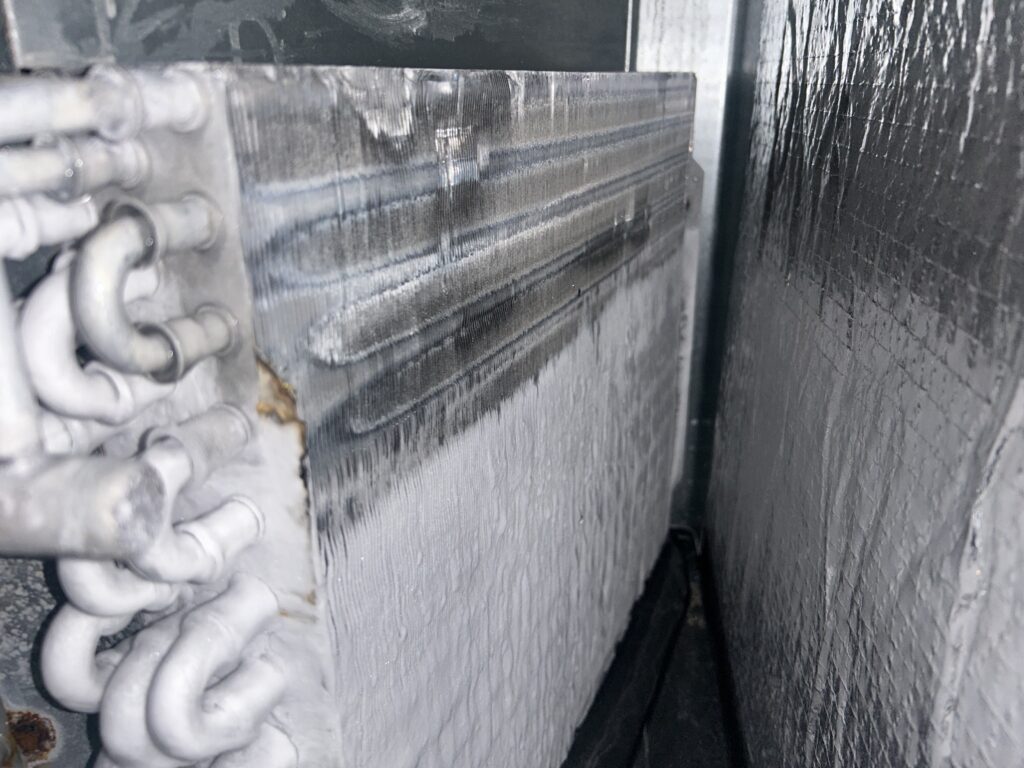
A frozen evaporator coil cannot absorb heat effectively. Air from the vents may feel warm, and airflow may become increasingly weak as ice builds up.
Common causes include restricted airflow, a dirty filter or coil, blower problems, low refrigerant, refrigerant-system restrictions, and incorrect equipment settings.
Turn cooling off if the system is frozen. You may set the thermostat fan to “On” if the blower is still moving air, but do not use tools or direct heat to remove the ice. After the coil thaws, the system should be inspected to determine why it froze.
Get help with a frozen AC unit
Refrigerant absorbs heat inside your home and carries it to the outdoor equipment. If the refrigerant level is low, the system may lose cooling capacity, run for long periods, or develop ice on the evaporator coil.
Air conditioners do not normally consume refrigerant. A low refrigerant charge may indicate a leak or an earlier charging problem. Adding refrigerant without investigating why it was lost does not correct an active leak.
The appropriate recommendation depends on the leak location, system age and condition, refrigerant type, repair accessibility, warranty coverage, repair cost, and likelihood of additional problems.
Dirt on the indoor evaporator coil can restrict airflow and reduce heat transfer. A heavily soiled outdoor condenser coil can also prevent the system from releasing heat effectively.
Coil cleaning should be based on the actual condition of the equipment. Chemical products, pressure washing, or improper cleaning methods can damage coil fins, electrical components, or protective coatings.
The outdoor fan moves air through the condenser coil so the system can release heat. If the fan motor fails, the outdoor unit may overheat, shut down, or stop cooling.
Turn the system off if the compressor appears to be running while the condenser fan is not spinning.
The compressor circulates refrigerant through the system. A compressor that cannot start or operate properly may cause the indoor blower to circulate warm air.
A compressor diagnosis should include more than confirming that the unit is not starting. Supporting electrical components, wiring, refrigerant operation, controls, equipment age, and warranty status should also be evaluated.
Heat pumps provide both heating and cooling. A reversing valve changes the direction of refrigerant flow when the system switches modes.
A valve, thermostat, wiring, or control problem can cause a heat pump to remain in heating mode or fail to switch properly into cooling. Professional testing is needed to determine whether the problem is electrical, mechanical, or refrigerant-related.
Damaged, disconnected, or poorly insulated ducts in a hot attic can allow conditioned air to escape and attic heat to enter the duct system.
Duct problems commonly produce warmer rooms, uneven temperatures, weak airflow, longer cooling cycles, higher energy consumption, or attic odors from the vents.
If only one room or part of the home is affected, the problem may involve ductwork or airflow rather than the air conditioner itself.
Warm air and weak airflow are related symptoms, but they are not always caused by the same problem.
Warm air means air is moving from the vents but is not being cooled properly. This frequently points to a thermostat setting, outdoor-unit failure, refrigerant problem, frozen coil, or compressor issue.
Weak airflow means little air is coming from the vents. This may involve a dirty filter, blower motor, frozen coil, restrictive ductwork, blocked return air, or airflow-setting problem.
Your system may experience both symptoms at the same time. We test cooling performance and airflow to determine where the problem originates.
Turn the cooling system off and schedule service if:
Ice appears on the refrigerant lines or indoor coil
Water is leaking around the equipment
The circuit breaker trips repeatedly
You smell burning or see damaged wiring
The outdoor unit hums without starting
The compressor runs but the condenser fan does not
The system makes grinding, arcing, or unusually loud noises
Continuing to operate equipment under these conditions could increase damage or create a safety concern. If you smell smoke, see sparks, or believe there is an electrical hazard, turn the system off at the breaker only if it is safe to do so.
We ask when the problem began, whether it affects the entire home, and whether the indoor and outdoor equipment are operating.
We verify the thermostat settings and determine whether the equipment is receiving the correct signals for cooling.
We inspect relevant airflow conditions, which may include the filter, blower, evaporator coil, supply air, return air, and duct system.
Depending on the symptoms, we may test capacitors, contactors, motors, controls, connections, voltage, and electrical current.
When appropriate, we check operating temperatures, system pressures, coil conditions, and other information needed to evaluate refrigerant performance.
We determine which component or condition is responsible and whether another issue contributed to the failure.
Our technician explains the diagnosis and recommended repair before approved work begins. If the system is aging or requires a major repair, we can also help you compare repair and replacement.
The cost depends on the actual cause. Correcting a thermostat setting or replacing a common electrical component usually involves less work than repairing a refrigerant leak, replacing a motor, or addressing a compressor problem.
Factors affecting repair cost include the failed component, testing time, equipment make and age, parts availability, refrigerant type, equipment accessibility, warranty coverage, contributing problems, and overall system condition.
We explain the diagnosis and repair options before approved work begins.
Not necessarily. Many causes of warm air can be repaired without replacing the air conditioner.
Repair may make sense when the failed component can be replaced economically, the equipment has otherwise been dependable, acceptable comfort remains, parts are readily available, useful warranty coverage remains, and another major expense appears unlikely.
Replacement may deserve consideration when the system is approximately 10–15 years old, breakdowns are becoming frequent, a compressor or evaporator coil requires major work, the equipment uses an older refrigerant, comfort has declined, warranty coverage has expired, or the repair cost is high compared with the system’s condition.
Modern Air of Katy will explain what we find and help you compare the options without high-pressure sales.
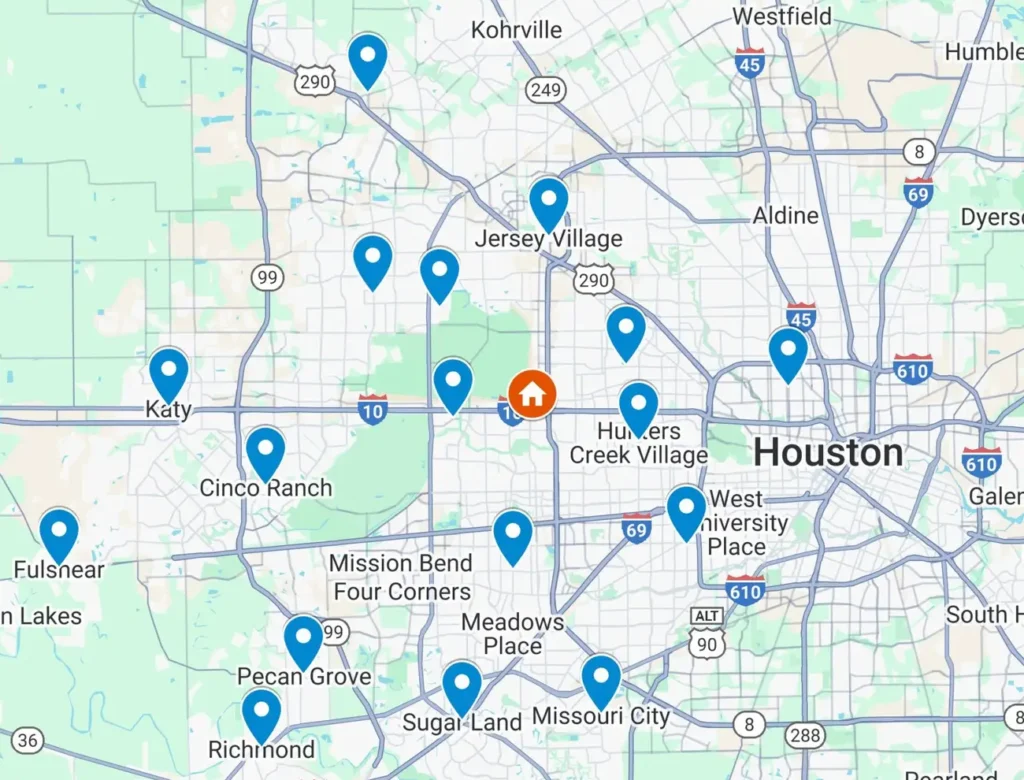
Modern Air of Katy is based in Spring Branch and provides residential AC repair throughout:
Spring Branch
Memorial
Briar Forest
Energy Corridor
Westchase
Spring Valley Village
Hedwig Village
Hunters Creek Village
Bunker Hill Village
Katy
We also serve Cypress, Sugar Land, and other nearby communities when scheduling permits.
Honest diagnostics and straightforward explanations
Repair recommendations without high-pressure sales
Upfront repair options before approved work begins
Service for most major residential HVAC brands
Local, family-owned company based in Spring Branch
More than 150 five-star Google reviews
Licensed and insured Texas HVAC contractor
Texas contractor license TACLA30277E
Maintenance cannot prevent every breakdown, but it can identify dirty coils, drainage problems, weak electrical components, airflow restrictions, and other developing concerns before they cause an unexpected loss of cooling.
Possible causes include an incorrect thermostat setting, a tripped outdoor-unit breaker, failed capacitor, frozen coil, refrigerant problem, electrical failure, or compressor issue. Testing is necessary because several failures can produce the same symptom.
The indoor blower and outdoor equipment may operate on separate electrical circuits. A tripped breaker, failed capacitor, contactor problem, motor failure, thermostat issue, or safety control could prevent the outdoor equipment from operating while the indoor fan continues running.
A severely dirty filter can restrict airflow, reduce cooling performance, and contribute to evaporator-coil icing. Replacing the filter may help, but a frozen system or persistent cooling problem should be professionally diagnosed.
Turn it off if you see ice or water, smell burning, hear severe mechanical noises, experience repeated breaker trips, or notice the outdoor compressor running without the fan. Otherwise, schedule service promptly to avoid unnecessary operation and possible additional damage.
No. Refrigerant work requires appropriate equipment, training, and certification. Low refrigerant may also indicate a leak that should be evaluated rather than simply adding more refrigerant.
Many common electrical, thermostat, drainage, and control repairs can be completed during the initial visit when the needed part is available. Refrigerant leaks, coil problems, compressor failures, or specialty components may require additional time.
Same-day appointments are often available, depending on your location, technician availability, current demand, and the time you call. Scheduling may become limited during extreme heat.
We service most major brands of residential central air conditioners, heat pumps, and related HVAC equipment. Contact us if you have questions about a particular brand or system type.
If warm air is coming from your vents, Modern Air of Katy can determine why the system is not cooling properly and explain the appropriate repair.
Call us for professional AC diagnostics and repair throughout Spring Branch, Memorial, West Houston, Katy, and nearby communities.
Modern Air of Katy — Honest HVAC Service, Done Right
Texas HVAC Contractor License TACLA30277E