
Is your air conditioner running continuously while your home remains warm? An AC that is not cooling may have a thermostat problem, restricted airflow, a failed outdoor component, frozen evaporator coil, refrigerant leak, ductwork problem, or another condition affecting its cooling capacity.
Modern Air of Katy diagnoses and repairs air conditioners that are not cooling throughout Spring Branch, Memorial, Briar Forest, the Energy Corridor, Westchase, West Houston, and nearby Katy.
We identify the cause, explain your repair options, and recommend only the work your system needs.
Same-day appointments often available • Honest diagnostics • Upfront repair options • No high-pressure sales
An air conditioner can appear to be operating without cooling the home properly. You may hear the indoor blower, feel air coming from the vents, or see the thermostat indicate that cooling is active, yet the indoor temperature does not fall.
The exact symptom helps narrow down the possible cause:
Warm or room-temperature air from every vent may indicate an outdoor-unit, thermostat, electrical, refrigerant, or compressor problem.
Cool but weak airflow may point to a filter, blower, frozen-coil, return-air, or duct restriction.
Some rooms cool while others stay warm may indicate ductwork, airflow, insulation, sun exposure, or building-related problems.
The system cools but never reaches the thermostat setting may involve reduced capacity, extreme outdoor conditions, duct leakage, equipment sizing, or heat entering the home.
The indoor fan operates but the outdoor unit does not may indicate an electrical, capacitor, contactor, motor, control, or compressor problem.
Several different failures can produce similar symptoms. Proper testing is necessary before replacing parts or adding refrigerant.
A few safe checks may identify a simple problem. Do not open HVAC electrical panels or attempt to test internal components yourself.
Confirm that the thermostat is set to “Cool” and that the selected temperature is below the current indoor temperature.
If you have a heat pump, verify that the system has not accidentally been placed in heating mode. If the control is inaccurate, malfunctioning, or incompatible with your equipment, learn about professional thermostat installation.
Set the thermostat fan to “Auto.” When the fan is set to “On,” the blower may continue moving room-temperature air between cooling cycles. This can make it seem as though the AC is blowing warm air even if it cools normally while the outdoor equipment is running.
A severely dirty air filter can restrict airflow, reduce cooling performance, and contribute to evaporator-coil icing.
Replace the filter if it is visibly dirty and safely accessible. If the system has already frozen, changing the filter may not correct the complete problem.
The indoor and outdoor HVAC equipment may use separate electrical circuits. The indoor blower can continue running when the breaker supplying the outdoor unit has tripped.
You may reset a tripped breaker once. If it trips again, leave it off and schedule professional service. Repeated resets may damage the equipment or create a safety concern.
While the thermostat is calling for cooling, look at the outdoor unit from a safe distance. Schedule service if it:
Is completely silent
Hums without starting
Starts and stops repeatedly
Operates without the fan spinning
Makes grinding, buzzing, or unusually loud noises
Do not open the outdoor electrical panel or attempt to push-start the fan.
Look for ice on the refrigerant lines or around the indoor equipment. Also check for water around the furnace, air handler, drain pan, ceiling, or nearby flooring.
Turn the cooling system off if you see ice or water that could damage your home. If water is present, review the common causes of an AC leaking water.
If these basic checks do not resolve the problem, the air conditioner likely requires professional diagnosis.
An incorrect thermostat mode or fan setting is one of the simplest possible causes. The thermostat may also have a wiring, sensor, power, programming, or control problem.
We check whether the thermostat is communicating correctly with the indoor and outdoor equipment before assuming a major component has failed.
A severely dirty filter reduces the amount of air moving across the evaporator coil. This may produce weak airflow, long cooling cycles, poor performance, or coil icing.
A restrictive filter can also affect performance even when it does not appear completely clogged. The correct filter type depends on the equipment and return-air configuration.
Your indoor blower may continue circulating air while the outdoor condenser is not operating. Without the outdoor equipment, the system cannot properly remove heat from the home.
Possible causes include:
A tripped breaker
Failed capacitor
Damaged contactor
Blown fuse
Failed condenser fan motor
Loose or burned wiring
Thermostat or control problem
Activated safety device
Compressor failure
Electrical HVAC repairs should be performed by a qualified technician.
Learn why your outside AC unit is not running
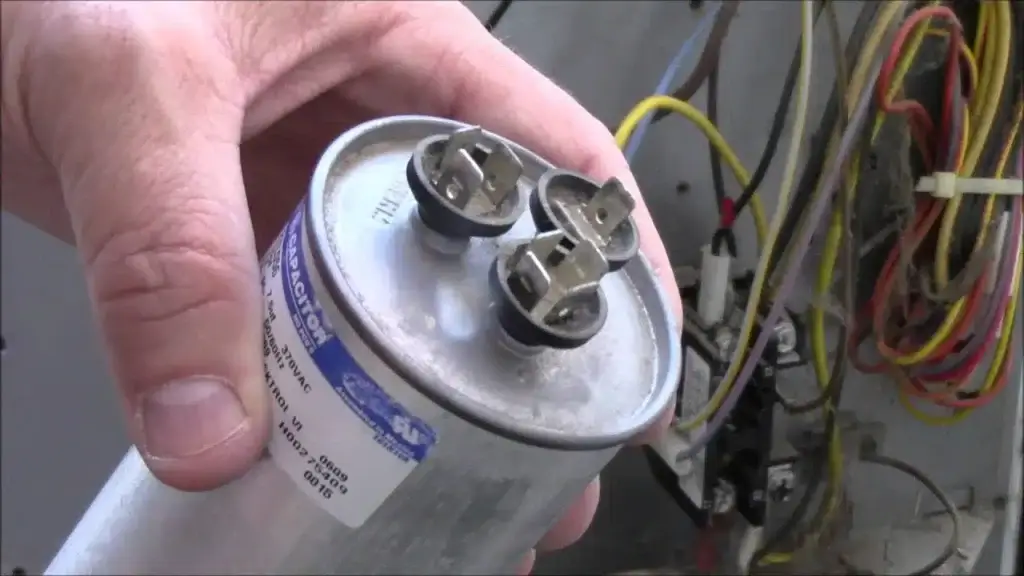
The capacitor helps start and operate motors in the outdoor equipment. A failed capacitor may cause the unit to hum, operate intermittently, or fail to start.
The contactor controls electrical power to the outdoor components. A burned or damaged contactor can prevent the condenser fan or compressor from operating. Testing is necessary because several other electrical failures can produce the same symptoms.
The outdoor condenser coil releases heat removed from your home. Dirt, debris, vegetation, or restricted airflow around the outdoor equipment can reduce its ability to reject heat.
A heavily restricted coil may contribute to poor cooling, longer run times, elevated operating pressures, or equipment shutdown. Do not pressure-wash the coil because excessive pressure can bend the fins or damage electrical components.
A frozen evaporator coil cannot absorb heat effectively. As ice develops, airflow may become progressively weaker and the home may stop cooling.
Common causes include:
Restricted airflow
A dirty filter or evaporator coil
Blower motor problems
Incorrect equipment settings
Low refrigerant
Refrigerant-system restrictions
If you see ice, turn cooling off. You may set the fan to “On” if it is still moving air, but do not attempt to break or melt the ice using tools or direct heat.
After the coil thaws, the system should be inspected to determine why it froze.
Learn what causes a frozen AC unit
Refrigerant absorbs heat inside your home and carries it to the outdoor equipment. A low refrigerant charge can reduce cooling capacity, cause long cycles, increase humidity, or allow the evaporator coil to freeze.
Air conditioners do not normally consume refrigerant. Low refrigerant may indicate a leak or a previous charging problem.
Adding refrigerant without investigating why it was lost does not correct an active leak. The appropriate recommendation depends on the leak location, system age, refrigerant type, equipment condition, accessibility, warranty coverage, and repair cost.
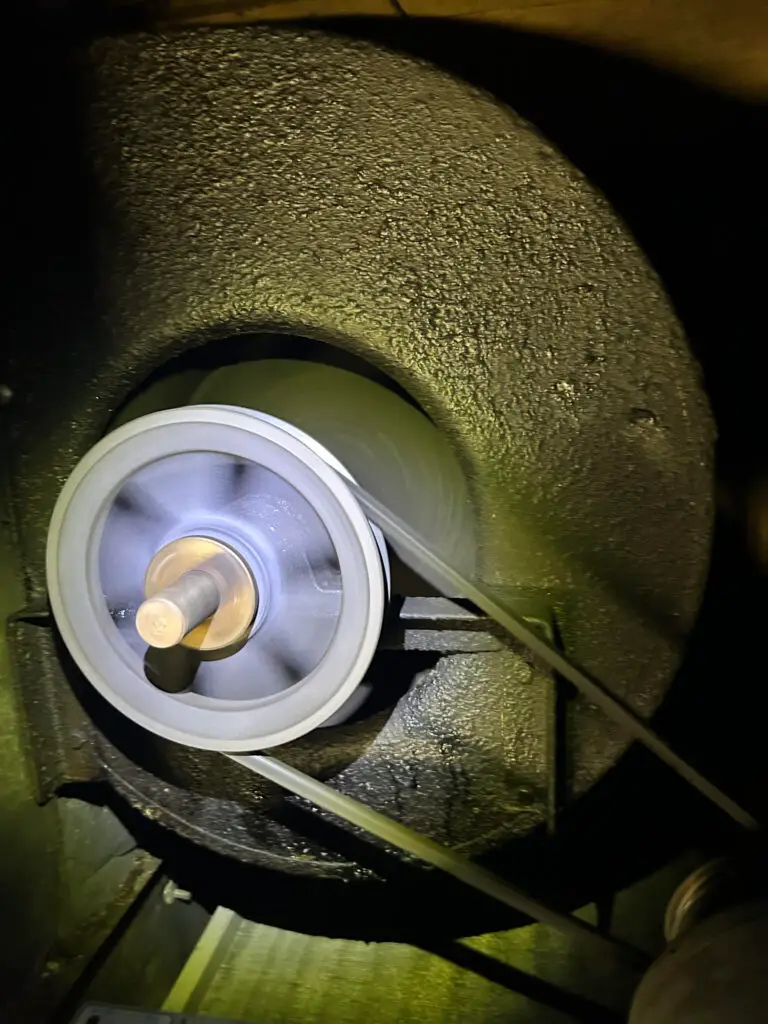
The blower moves air across the evaporator coil and through the duct system. A failing blower motor, control problem, dirty blower wheel, incorrect speed setting, or airflow restriction may prevent enough conditioned air from reaching the rooms.
Possible symptoms include weak airflow, unusual blower noise, intermittent airflow, coil icing, uneven temperatures, or overheating indoor equipment.
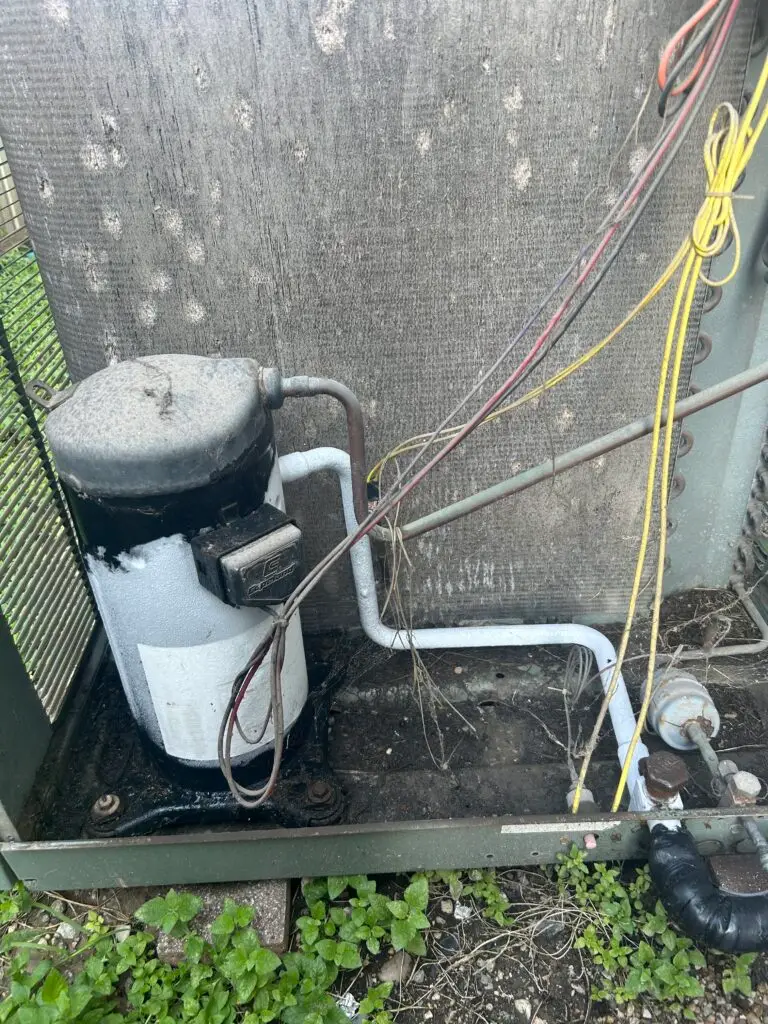
The compressor circulates refrigerant through the system. A compressor that cannot start or operate properly may leave the indoor blower circulating warm air.
Before recommending compressor replacement, we evaluate supporting electrical components, controls, refrigerant conditions, equipment age, overall condition, and warranty status.
The air conditioner may be producing cool air that never reaches the intended rooms because of disconnected ductwork, torn or leaking ducts, crushed flexible duct, excessive sag, damaged insulation, restricted supply runs, inadequate return capacity, or poor duct-system layout.
Duct problems often create uneven temperatures or weak airflow in specific parts of the home.
Explore HVAC ductwork repair in Houston
The HVAC system must pull enough air back through the return side to deliver the correct amount through the supply vents.
An inadequate or restrictive return system can contribute to weak airflow, excessive noise, high static pressure, reduced performance, and evaporator-coil icing.
An undersized air conditioner may struggle to maintain the thermostat setting during peak heat. An oversized system may cool quickly and shut off before removing enough humidity, leading to temperature swings and uncomfortable indoor conditions.
System size should be based on the home’s cooling requirements, not merely square footage or the size of the previous equipment.
Heat entering through the attic, windows, doors, walls, or unsealed openings can exceed the amount of heat the air conditioner removes.
Comfort may also be affected by inadequate attic insulation, air leakage, large west-facing windows, limited shade, high ceilings, additions, remodeling, or uninsulated ductwork.
Replacing the air conditioner alone may not correct a building-related comfort problem.
A heat pump provides both heating and cooling. A thermostat, wiring, control, or reversing-valve problem may prevent the system from switching correctly into cooling mode.
Professional testing is needed to determine whether the problem is electrical, mechanical, or refrigerant-related.
These symptoms are related but not identical.
An AC blowing warm air moves air through the vents, but the air feels warm or close to room temperature. This often points to a thermostat setting, outdoor-unit failure, refrigerant problem, frozen coil, or compressor issue.
An AC running but not cooling enough may still produce cool air. However, the system cannot lower the indoor temperature sufficiently or keep the home comfortable.
This broader performance problem may involve equipment capacity, airflow, duct leakage, insulation, extreme outdoor temperatures, or heat entering the home.-
During extreme Houston heat, an air conditioner may operate for longer periods than it does during milder weather. Long cycles alone do not always indicate a failure.
However, the system should still produce cool air and make reasonable progress toward the thermostat setting.
Professional testing is appropriate when:
The indoor temperature continues rising
Air from the vents feels warm
Cooling performance changed suddenly
The system never recovers after outdoor temperatures fall
Certain rooms have little or no airflow
Ice or water appears around the equipment
The outdoor unit repeatedly shuts down
Energy consumption changes dramatically without an obvious reason
The correct indoor temperature during extreme weather depends on system design, home construction, insulation, thermostat setting, outdoor conditions, and internal heat sources.
Turn the cooling system off and schedule service if:
Ice appears on the refrigerant lines or evaporator coil
Water is leaking around the equipment
The HVAC breaker trips repeatedly
You smell burning or see damaged wiring
The outdoor unit hums without starting
The compressor runs while the outdoor fan is not spinning
The system makes grinding, arcing, or severe mechanical noises
If the equipment is operating normally but not cooling sufficiently, you may continue observing it while arranging service. Do not continue running a system that shows signs of electrical trouble, icing, overheating, or water leakage.
We ask when the cooling problem began, whether it affects the whole home, and whether the indoor and outdoor equipment are operating.
We verify the cooling settings and determine whether the system is receiving the correct operating signals.
Depending on the symptoms, we inspect relevant airflow conditions, including the filter, blower, evaporator coil, supply air, return air, and accessible ductwork.
We may test capacitors, contactors, motors, wiring, controls, voltage, and electrical current as appropriate.
When needed, we evaluate system temperatures, pressures, coil conditions, and other operating information relevant to cooling performance.
We determine which component or condition is responsible and whether another issue contributed to the problem.
Our technician explains the diagnosis and recommended work before approved repairs begin. If the system is aging or requires a major repair, we can also help you compare repair and replacement.
Depending on the diagnosis, repairs may include:
Capacitor replacement
Contactor or relay replacement
Condenser fan motor repair
Indoor blower motor repair
Thermostat or control repair
Electrical and wiring repair
Condensate drain repair
Airflow correction
Evaporator-coil service
Refrigerant-leak diagnosis
Refrigerant-system repair
Compressor diagnosis
Ductwork repair or modification
The correct repair depends on the cause—not merely the symptom.
The repair cost depends on the failed component, the work required, and the equipment’s condition.
Correcting a thermostat setting or replacing a common electrical component will generally cost less than repairing a refrigerant leak, replacing a motor, repairing a coil, or addressing a compressor problem.
Factors that may affect the price include:
The failed component
Time required for diagnosis
Equipment make, model, and age
Parts availability
Equipment accessibility
Refrigerant type and amount
Warranty coverage
Whether another condition caused the failure
Overall system condition
We explain the diagnosis and repair options before approved work begins.
A loss of cooling does not automatically mean the air conditioner needs to be replaced. Many electrical, airflow, drainage, motor, thermostat, and control problems can be repaired economically.
Repair makes sense if the failed part is affordable, the equipment has been reliable, replacement parts are available, the system still offers good comfort, warranty coverage is active, and no major expenses are expected soon.
Consider replacement if the system is about 10–15 years old, repairs are happening often, a compressor or evaporator coil needs significant work, the equipment uses an older refrigerant, warranty coverage is gone, comfort has decreased, or repair costs are high compared to the system’s condition.
Modern Air of Katy will explain what we find and help you make an informed decision without high-pressure sales.
Routine maintenance cannot prevent every failure, but it may identify developing airflow, drainage, electrical, coil, or performance problems before they cause an unexpected loss of cooling.
Professional AC maintenance may help identify:
Weak electrical components
Dirty or restricted coils
Condensate drainage problems
Airflow restrictions
Abnormal motor operation
Temperature and performance concerns
Visible equipment deterioration
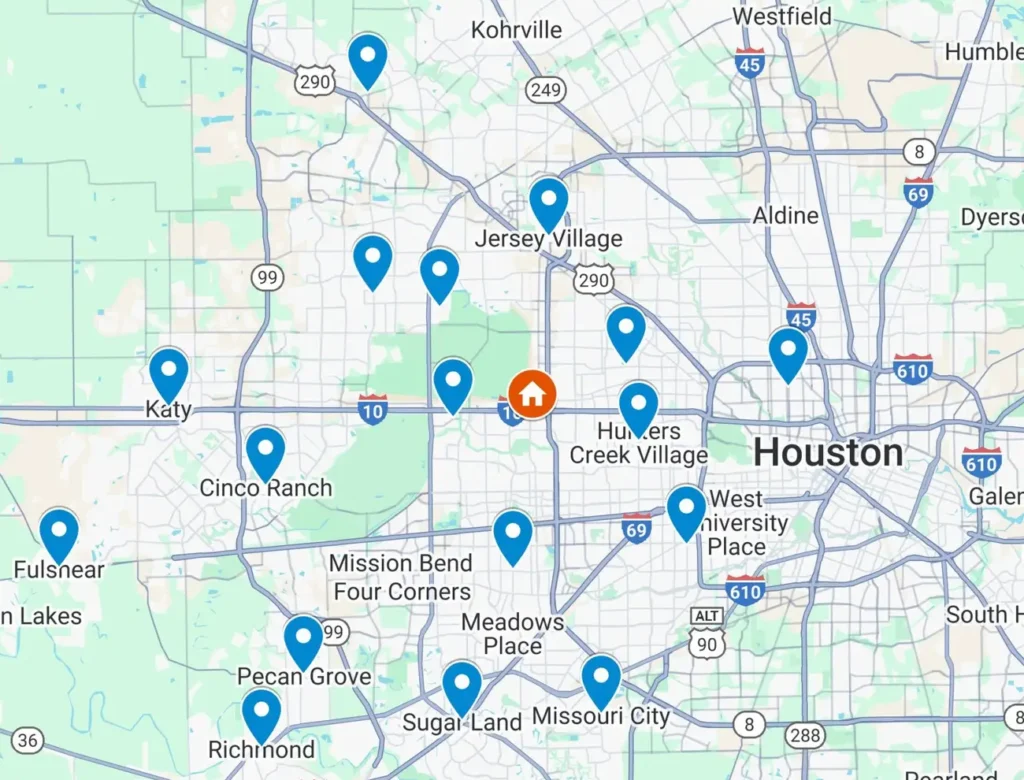
Modern Air of Katy is based in Spring Branch and provides residential AC repair throughout:
Spring Branch
Memorial
Briar Forest
Energy Corridor
Westchase
Spring Valley Village
Hedwig Village
Hunters Creek Village
Bunker Hill Village
Katy
We also serve Cypress, Sugar Land, and other nearby communities when scheduling permits.
Schedule AC Repair in Spring Branch
Request AC Repair in Katy
View All Service Areas
Honest diagnostics and straightforward explanations
Repair recommendations without high-pressure sales
Upfront repair options before approved work begins
Service for most major residential HVAC brands
Local, family-owned company based in Spring Branch
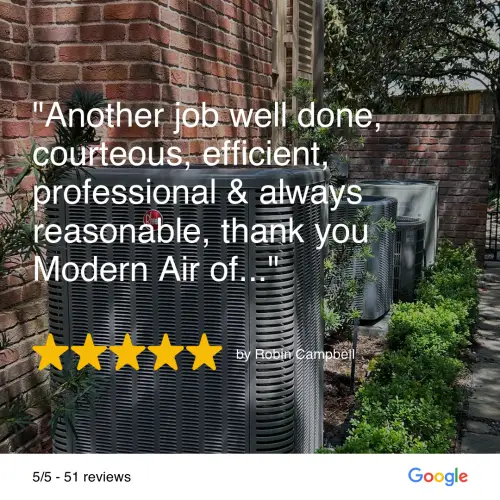
More than 140 five-star Google reviews
Licensed and insured Texas HVAC contractor
Texas contractor license TACLA30277E
Possible causes include restricted airflow, dirty coils, a failed outdoor component, low refrigerant, a frozen evaporator coil, blower trouble, leaking ductwork, equipment-sizing problems, or excessive heat entering the home.
The system may have weak airflow, duct leakage, inadequate capacity, dirty coils, insulation problems, air leakage, or unusually high heat gain. The supply temperature and airflow should be evaluated together.
The appropriate supply-air temperature depends on the indoor conditions, airflow, humidity, and equipment operation. Technicians often compare return and supply temperatures rather than relying on a single vent temperature.
Yes. A severely dirty or overly restrictive filter can reduce airflow and may contribute to poor cooling or evaporator-coil icing. A filter change may not resolve a system that has already frozen or developed another problem.
Turn it off if you see ice or leaking water, smell burning, hear severe mechanical noises, or experience repeated breaker trips. Otherwise, schedule service promptly to avoid unnecessary operation and possible additional damage.
Possible causes include extreme afternoon heat, solar gain, reduced system capacity, dirty coils, duct leakage, inadequate insulation, equipment-sizing problems, or a home cooling load that exceeds the system’s ability under peak conditions.
Low refrigerant may indicate a leak or an earlier charging problem. Air conditioners do not normally consume refrigerant, so the cause should be investigated before refrigerant is added.
Same-day appointments are often available, depending on your location, technician availability, current demand, and the time you call. Scheduling may become limited during extreme heat.
We service most major brands of residential central air conditioners, heat pumps, and related HVAC equipment. Contact us with questions about a specific brand or system type.
Not necessarily. Constant operation can result from extreme weather, thermostat settings, dirty coils, restricted airflow, low refrigerant, duct leakage, or equipment-sizing issues. Diagnosis is needed before repair or replacement is recommended.
If your air conditioner is running but not cooling your home, Modern Air of Katy can identify the cause and explain the appropriate repair.
Call us for professional AC diagnostics throughout Spring Branch, Memorial, West Houston, Katy, and nearby communities.
Modern Air of Katy — Honest HVAC Service, Done Right
Texas HVAC Contractor License TACLA30277E