
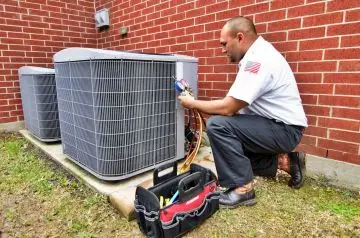
Is the indoor fan blowing while the outside AC unit remains silent? Is the condenser humming, clicking, or running without its fan spinning? When the outdoor equipment does not operate correctly, your air conditioner cannot release heat from the home.
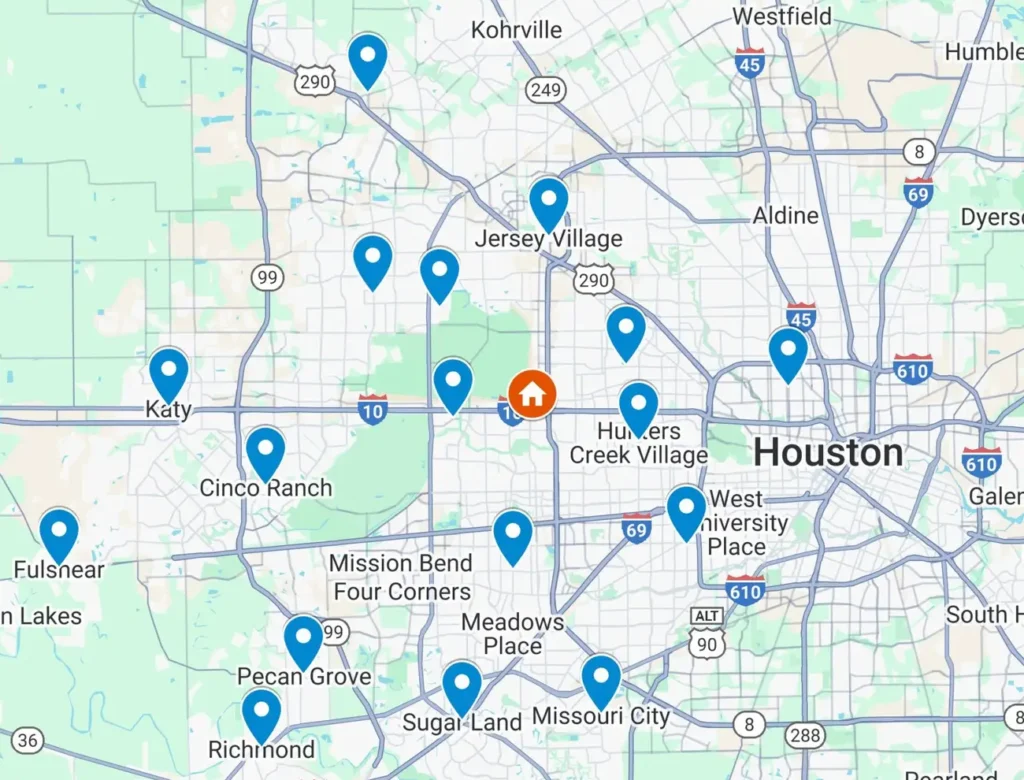
Modern Air of Katy diagnoses and repairs outside AC units throughout Spring Branch, Memorial, Briar Forest, the Energy Corridor, Westchase, the Memorial Villages, and nearby Katy. We test the system, identify the actual failure, and explain your repair options before approved work begins.
Same-day appointments frequently available • Honest diagnostics • Upfront repair options • Local West Houston service
You can make a few safe observations before scheduling service:
Check the thermostat. Confirm it is set to “Cool” and below the current room temperature.
Check whether the indoor blower is running. This detail can help the technician narrow the diagnosis.
Check the HVAC circuit breakers once. If a breaker is tripped, reset it one time only. If it trips again, leave it off and schedule service.
Look for an obvious switch issue. Make sure an accessible indoor service switch has not been turned off accidentally. Do not open or remove the outdoor disconnect.
Listen from a safe distance. Note whether the outdoor unit is silent, humming, buzzing, clicking, or operating without the fan.
Turn cooling off if the unit hums, overheats, smells burned, or repeatedly trips a breaker. Continuing to run malfunctioning equipment may cause additional damage.
Do not reach through the grille, push the fan blade, open electrical panels, remove the disconnect, or attempt to replace a capacitor. AC equipment contains high voltage, and capacitors can retain an electrical charge after power is disconnected.
The outdoor unit contains the compressor, condenser fan motor, coil, electrical components, and controls needed to move heat outdoors. A failure in any part of the operating sequence can prevent the unit from starting or running normally.
The thermostat initiates the cooling call, but wiring, a control board, transformer, sensor, safety switch, or low-voltage fuse can interrupt the signal before it reaches the outdoor equipment.
If neither the indoor nor outdoor equipment starts, review possible reasons your AC is not turning on.
A tripped breaker, damaged disconnect, blown fuse, loose connection, or utility-related power issue can stop the condenser. A breaker that trips repeatedly may indicate a shorted wire, failing motor, compressor problem, or another electrical fault. Do not continue resetting it.
Capacitors help start and run the compressor and condenser fan motor. A weak or failed capacitor may leave the outside unit silent, cause it to hum without starting, or allow one component to operate while another remains off.
A swollen capacitor can sometimes be visible to a technician, but appearance alone is not a complete diagnosis. It should be electrically tested and replaced with the correct rated component.
The contactor switches high-voltage power to the outdoor components when cooling is requested. Pitted contacts, a failed coil, insects, debris, loose wiring, or heat damage may prevent dependable operation.
The fan moves outdoor air across the condenser coil. If the motor, capacitor, wiring, or fan blade fails, the compressor may overheat or shut down. Turn cooling off if the outdoor unit runs while the fan remains stopped.
The compressor circulates refrigerant through the system. Electrical trouble, overheating, mechanical wear, refrigerant problems, or failure of supporting components may prevent it from starting or cause it to shut down.
Because a compressor is a major component, we evaluate the compressor, capacitor, contactor, wiring, refrigerant circuit, system age, and warranty status before recommending a major repair.
Some HVAC systems include condensate safety switches that stop cooling when water backs up. A clogged drain line or full auxiliary pan can therefore make the outdoor unit appear to have failed even when the shutdown is protecting the home from water damage.
Learn more about AC water leaks and condensate drain problems.
Some systems shut down when operating conditions move outside a safe range. A dirty outdoor coil, failed fan, airflow problem, refrigerant issue, extreme temperature, or overheated component may activate a protective control. Resetting power does not correct the cause.
Grass clippings, leaves, debris, and dirt can reduce airflow through the condenser coil. Severe restriction may increase operating pressures and temperatures, reduce cooling capacity, and contribute to protective shutdowns.
Do not pressure-wash the coil. High pressure can bend the fins or damage the equipment.
Possible causes include a thermostat or control problem, loss of power, tripped breaker, damaged contactor, open safety switch, wiring failure, or an interrupted cooling call.
A humming sound may involve a failed capacitor, stalled fan motor, compressor starting problem, or electrical issue. Turn the system off and arrange professional testing.
If the compressor appears to run but the fan is stopped, the motor, capacitor, wiring, relay, or fan assembly may have failed. Continued operation can cause overheating, so turn cooling off.
The condenser fan can operate even when the compressor does not. Other possibilities include low refrigerant, coil problems, airflow restrictions, or an indoor equipment failure. See why an AC may run without cooling.
Rapid or unusually frequent cycling can involve a control problem, failing capacitor, overheating component, restricted airflow, dirty coil, refrigerant issue, improper sizing, or another condition that requires testing.
Repeated clicking may involve a contactor or control signal. Buzzing can be electrical or mechanical, and grinding may indicate motor or bearing damage. Turn the system off when a sound is loud, new, or accompanied by poor cooling, heat, smoke, or a burned odor.
Replacing the most common part without testing can miss the actual cause of the failure. Depending on the symptoms and equipment, Modern Air of Katy may:
Confirm the thermostat’s cooling call
Check indoor and outdoor equipment operation
Inspect breakers, disconnects, fuses, and accessible wiring
Test low-voltage controls and safety switches
Evaluate the contactor and capacitors
Test the condenser fan motor and compressor
Inspect the outdoor coil and fan assembly
Measure electrical performance and operating temperatures
Evaluate refrigerant pressures and temperatures when appropriate
Check whether an airflow, drainage, or control problem caused the shutdown
Once the cause is identified, we explain the diagnosis, repair options, and relevant system condition before approved work begins.
Depending on the diagnosis, repair may involve:
Capacitor replacement
Contactor replacement
Condenser fan motor repair or replacement
Electrical connection or wiring repair
Thermostat or low-voltage control repair
Fuse, transformer, relay, or control-board service
Condensate drain and safety-switch correction
Outdoor coil cleaning
Refrigerant-system diagnosis
Compressor testing or replacement evaluation
Correction of another condition that caused overheating or shutdown
Modern Air of Katy repairs most major brands of residential central air conditioners and heat pumps. Parts availability, warranty status, equipment design, and the overall condition of the system can affect which options are practical.
The price depends on the failed component and whether another condition contributed to the failure. A minor wiring repair or common electrical component is different from replacing a condenser fan motor, locating a refrigerant problem, or addressing a compressor failure.
Cost factors may include:
The component that failed
Diagnostic and repair time
Equipment accessibility
System make, model, age, and refrigerant type
Parts availability
Manufacturer or parts-warranty coverage
Whether overheating, electrical damage, or another problem affected additional components
The overall condition of the indoor and outdoor equipment
We explain the diagnosis and available repair options before approved work begins.
Many outdoor-unit problems can be repaired economically. A failed capacitor, contactor, fan motor, control, or wiring connection does not automatically mean the air conditioner needs replacement.
Replacement may deserve consideration when the system has a major compressor or condenser-coil failure and is older, out of warranty, increasingly unreliable, uses an older refrigerant, or has other significant condition and performance problems.
The outdoor unit must also be compatible with the indoor coil and air handler or furnace. Replacing only one major section may not always provide an appropriate equipment match or warranty outcome.
We help you evaluate repair cost, system age, repair history, equipment compatibility, efficiency, comfort, refrigerant type, warranty coverage, and expected remaining life.
Routine maintenance cannot prevent every component failure, but it can identify developing problems and operating conditions before they cause an unexpected shutdown.
Homeowners can help by:
Keeping leaves, weeds, and stored items away from the outdoor unit
Avoiding lawn-equipment damage to wiring, tubing, and coil fins
Not covering the operating unit or enclosing it with inadequate clearance
Watching for unusual noise, frequent cycling, or declining cooling
Having repeated breaker trips or electrical odors inspected promptly
Scheduling professional maintenance before periods of heavy cooling demand
Professional service may include inspecting electrical components, checking the outdoor coil, evaluating motors and controls, confirming temperatures, and reviewing overall cooling performance.
Modern Air of Katy is based in Spring Branch and provides residential condenser and outside-unit repair throughout:
Spring Branch
Memorial
Briar Forest
Energy Corridor
Westchase
Spring Valley Village
Hedwig Village
Hunters Creek Village
Bunker Hill Village
Katy
Service may also be available in Cypress, Sugar Land, and other nearby communities depending on scheduling.

Honest diagnostics and straightforward explanations
Repair recommendations without high-pressure sales
Upfront repair options before approved work begins
Service for most major residential HVAC brands
Local, family-owned company based in Spring Branch
More than 150 five-star Google reviews
Licensed and insured Texas HVAC contractor
Texas contractor license TACLA30277E
Family-Owned • Licensed and Insured • Google Guaranteed • Five-Star Rated
An outdoor-unit failure may create symptoms that overlap with other cooling problems:
AC not cooling — the system operates but cannot lower the indoor temperature
AC blowing warm air — air from the vents is not cold
Frozen AC unit — ice appears on the coil, refrigerant line, or equipment
AC not turning on — neither the indoor nor outdoor equipment starts normally
AC leaking water — condensate appears around the indoor equipment or nearby surfaces
For a complete overview of diagnostic and repair services, visit our Houston AC repair page.
The indoor blower can operate even when the outdoor equipment has lost power or has a failed capacitor, contactor, fan motor, compressor, control signal, wiring connection, or safety switch. Testing is required to determine which condition is present.
Yes, especially if the unit hums, buzzes, overheats, smells burned, repeatedly clicks, or trips a breaker. Leaving the thermostat in cooling mode will not restore a failed outdoor component and may cause the indoor blower to circulate unconditioned air.
You may check and reset a tripped breaker once. If it trips again, leave it off and schedule professional service. Repeatedly resetting a breaker can expose the equipment to additional damage and may create a safety risk.
Possible causes include a failed capacitor, defective fan motor, damaged wiring, control problem, obstruction, or loss of power. Do not push the blade or reach into the unit. Turn cooling off and have the equipment tested.
A humming outdoor unit may have a failed capacitor, stalled fan motor, compressor starting problem, or another electrical or mechanical fault. Shut the system off rather than allowing it to continue humming.
Yes. The thermostat or related low-voltage wiring and controls may fail to deliver the cooling signal. However, power, safety, electrical, motor, and compressor problems can create the same symptom.
No. Compressor failure is only one possibility. Capacitors, contactors, fan motors, controls, wiring, safety switches, and power problems are also common causes. The system should be tested before a major repair is recommended.
Same-day appointments are frequently available, and many common repairs can be completed during the initial visit when the required part is available. More complex electrical, refrigerant, motor, coil, or compressor problems may require specialty parts or additional work.
We service most major brands of residential central air conditioners and heat pumps. Contact us with the equipment information if you have questions about a particular brand or system type.
If your indoor fan is running but the outside AC unit is not, Modern Air of Katy can identify the cause and explain the appropriate repair.
Call us for professional AC diagnostics throughout Spring Branch, Memorial, West Houston, Katy, and nearby communities.
Modern Air of Katy — Honest HVAC Service, Done Right
Texas HVAC Contractor License TACLA30277E