
If your air conditioner will not start, the problem may involve the thermostat, electrical supply, condensate safety switch, indoor equipment, outdoor unit, control system, or a failed component.
Modern Air of Katy diagnoses and repairs AC systems that are not turning on throughout Spring Branch, Memorial, Briar Forest, the Energy Corridor, Westchase, the Memorial Villages, West Houston, and nearby Katy.
We identify the cause, explain your repair options, and recommend only the work your system needs.
Same-day appointments often available • Honest diagnostics • Upfront repair options • No high-pressure sales
A central air-conditioning system contains indoor equipment, outdoor equipment, controls, safety devices, wiring, and separate electrical circuits. A failure in any part of that chain may prevent the complete system—or only one section—from operating.
The symptoms provide useful clues:
Nothing operates: The thermostat is blank, no air moves, and the outdoor unit is silent. The problem may involve power, a switch, transformer, low-voltage fuse, thermostat, control, or safety device.
The indoor blower runs but the outdoor unit does not: The outdoor circuit, capacitor, contactor, condenser fan motor, controls, wiring, or compressor may be involved.
The system clicks but does not start: A control may be attempting to energize equipment that cannot start because of an electrical, motor, capacitor, or compressor problem.
The thermostat works but the system does not respond: The issue may involve thermostat wiring, a condensate safety switch, equipment controls, power, or another open safety circuit.
The AC starts and immediately stops: A safety device, drainage problem, electrical failure, control issue, or equipment protection may be interrupting operation.
Because different failures can create similar symptoms, proper testing is necessary before parts are replaced.
You can perform a few basic checks before scheduling service. Stop if anything appears damaged, wet, overheated, or unsafe. Do not open electrical panels or touch internal HVAC components.
Confirm that the thermostat is set to “Cool” and that the selected temperature is below the current room temperature. If the thermostat uses replaceable batteries and the screen is blank, install the correct batteries according to the manufacturer’s instructions.
A blank or unresponsive thermostat does not always mean the thermostat itself has failed. Loss of equipment power, a blown low-voltage fuse, failed transformer, wiring problem, or open condensate safety switch can also remove thermostat power.
If you need a compatible replacement control, learn about professional thermostat installation.
Central HVAC systems may use separate breakers for the indoor furnace or air handler and the outdoor condenser. Check the electrical panel for a breaker that has moved to the tripped position.
You may reset a tripped breaker once. If it trips again, leave it off and request professional service. Repeatedly resetting a breaker can damage equipment or create a safety hazard.
Many furnaces and air handlers have a nearby service switch that resembles a light switch. Confirm that it has not been turned off accidentally.
Do not remove equipment panels or bypass the blower-door safety switch. If the access panel is loose or incorrectly installed, arrange service rather than attempting to defeat the safety device.
A severely restricted filter usually causes an airflow or freezing problem rather than a complete loss of power. However, a frozen coil or overheated component may eventually cause the equipment to stop operating.
Replace a visibly dirty filter if it is safely accessible, but do not assume the filter is the only problem when the system still will not start.
Houston air conditioners remove substantial moisture. If the condensate line becomes clogged, water may activate a float switch that shuts the cooling system off to help prevent property damage.
Do not bypass the float switch. If water is present near the furnace, air handler, drain pan, ceiling, or floor, turn the system off and arrange service.
Learn why an AC may be leaking water
If the indoor blower operates but the outside unit remains silent, hums without starting, clicks repeatedly, or operates without the fan spinning, turn cooling off and schedule service.
Do not remove the outdoor electrical cover, touch the disconnect components, or attempt to push-start the fan.
Learn why the outside AC unit may not be running
If these basic checks do not restore normal operation, the system requires professional diagnosis.
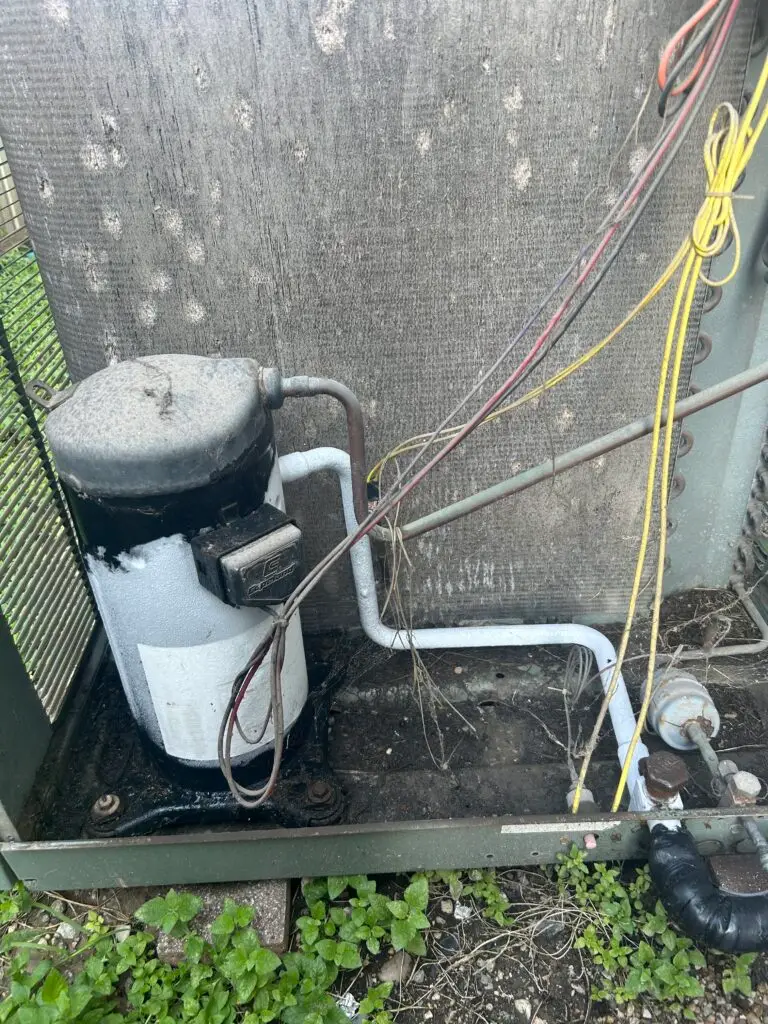
Stop operating the equipment and request service if:
A breaker trips repeatedly
You smell burning or melted plastic
You see sparks, scorched wiring, or electrical damage
The outdoor unit hums but cannot start
The compressor operates while the outdoor fan is not spinning
Water is leaking around the indoor equipment
Ice appears on the refrigerant lines or coil
The system makes grinding, arcing, or severe mechanical noises
The equipment starts and stops repeatedly within a short period
If you smell smoke, see sparks, or believe there is an electrical hazard, turn the system off at the breaker only if it is safe to do so. Contact emergency services when there is an immediate fire or electrical danger.
The thermostat must be set correctly and communicate the cooling request to the HVAC equipment. Incorrect settings, depleted batteries, damaged wiring, a failed sensor, loss of low-voltage power, or internal thermostat failure may prevent operation.
We evaluate the thermostat and related controls before recommending replacement.
An HVAC breaker can trip because of a short circuit, failing motor, damaged wire, compressor problem, loose connection, or excessive electrical current. A single trip may follow a temporary event, but a breaker that trips again indicates a problem requiring diagnosis.
Power can also be interrupted by a service switch, disconnect problem, blown fuse, utility issue, or damaged electrical connection.
A float switch may interrupt cooling when water rises in the drain pan or condensate line. This safety feature helps protect ceilings, flooring, and equipment from water damage.
Common causes include algae or debris in the drain, a blocked trap, improper drain slope, a failed condensate pump, or another drainage problem. The blockage and source of the water should be corrected before the switch is reset.
Many indoor units contain a door switch that prevents operation when the blower compartment panel is removed or improperly seated. A loose access panel can interrupt equipment power.
Do not tape down, bypass, or defeat the switch. A technician can determine whether the panel, switch, or another power problem is responsible.
Many HVAC control boards use a small fuse to protect the low-voltage circuit. A shorted thermostat wire, damaged contactor coil, incorrect accessory wiring, water exposure, or another electrical fault can blow the fuse and leave the thermostat blank or the system unresponsive.
Replacing the fuse without locating the short may result in another immediate failure.
The transformer supplies low-voltage power to the thermostat and control circuits. A failed transformer can prevent the thermostat, relays, contactor, and other controls from operating.
Testing should determine whether the transformer failed independently or another electrical problem caused the failure.
Capacitors help start and operate motors in the HVAC system. A failed capacitor may cause the outdoor unit, blower motor, or compressor to hum, start intermittently, or remain off.
Capacitors can retain an electrical charge after power is disconnected and should be tested and replaced by a qualified technician.
Contactors and relays control electrical power to major components. Burned contacts, a failed coil, control-voltage loss, or damaged wiring may prevent the outdoor condenser, blower, or compressor from starting.
Loose connections, damaged low-voltage wires, failed control boards, open safety circuits, and improper thermostat configuration can interrupt the cooling command.
Control problems require systematic testing because replacing the thermostat alone may not correct the underlying failure.
The blower moves air across the evaporator coil and through the duct system. If the blower motor, module, capacitor, relay, or control fails, the indoor equipment may not move air even when the thermostat calls for cooling.
Possible symptoms include humming, intermittent airflow, overheating, unusual noise, or no airflow from the vents.
The condenser fan moves outdoor air through the coil so the system can release heat. A failed fan motor may prevent cooling or cause the equipment to shut down for protection.
Turn the system off if the compressor appears to operate while the outdoor fan remains still.
The compressor circulates refrigerant through the system. A failed capacitor, contactor, wire, control, internal overload, refrigerant-circuit condition, or compressor failure may prevent it from starting.
Before recommending compressor replacement, we evaluate supporting electrical components, controls, refrigerant conditions, equipment age, overall system condition, and warranty coverage.
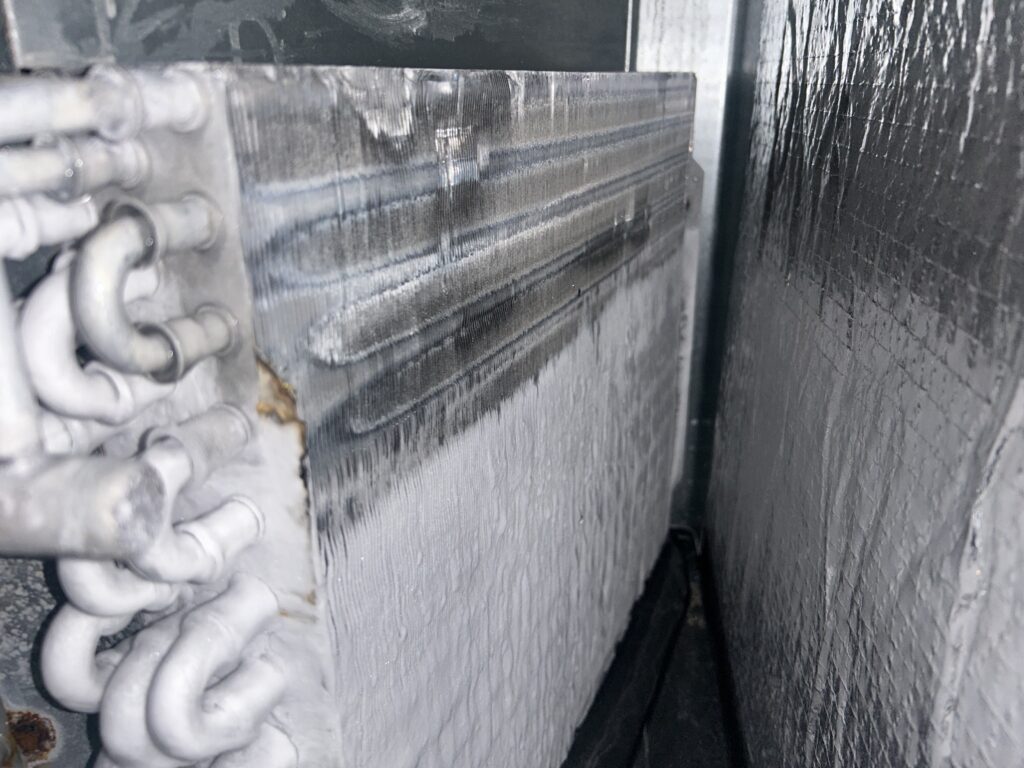
Restricted airflow, blower trouble, dirty equipment, low refrigerant, or another refrigerant-system problem may cause the evaporator coil to freeze. The system may eventually stop operating normally or move little to no air.
Turn cooling off and allow the ice to thaw naturally. Do not use tools or direct heat to remove it.
Learn what causes a frozen AC unit
HVAC systems may contain pressure controls, temperature limits, condensate switches, motor overloads, communicating controls, and other protective devices. A safety shutdown indicates that an operating condition or circuit requires evaluation.
The safety should not be bypassed simply to force the equipment to operate.
This distinction helps narrow the diagnosis.
When the thermostat, indoor blower, and outdoor unit are all off, possible causes include loss of power, a service switch, blower-door switch, transformer, low-voltage fuse, thermostat, wiring, control board, or condensate safety device.
When air moves through the vents but the outdoor unit remains off, the problem may involve the outdoor breaker, disconnect, capacitor, contactor, fan motor, compressor, thermostat signal, pressure control, or wiring.
This may indicate a blower motor, relay, control board, power, duct, or indoor-equipment problem. Turn cooling off to reduce the risk of evaporator-coil icing or equipment damage.
If the system operates but fails to cool properly, read about an AC running but not cooling or an AC blowing warm air.
We ask what stopped operating, when the problem began, whether the thermostat has power, and whether you noticed water, ice, noise, odors, or breaker trips.
We evaluate the appropriate breakers, switches, equipment power, thermostat settings, control voltage, and cooling signal.
When applicable, we inspect condensate switches, drain conditions, equipment-door switches, limits, and other controls that may interrupt operation.
Depending on the symptoms, we may test fuses, transformers, capacitors, contactors, relays, wiring, motors, control boards, voltage, and electrical current.
We determine whether the failure is limited to the thermostat, indoor unit, outdoor unit, or a control connecting the system components.
We identify the failed component or open circuit and evaluate whether another condition contributed to the failure.
Our technician explains the diagnosis and recommended repair before approved work begins. If the system is aging or requires a major repair, we can also help you compare repair and replacement.
Depending on the diagnosis, the repair may involve:
Thermostat battery or setting correction
Thermostat replacement
Thermostat or control-wiring repair
Low-voltage fuse replacement
Transformer replacement
Condensate drain clearing
Float-switch repair or replacement
Capacitor replacement
Contactor or relay replacement
Electrical-connection repair
Blower motor repair
Condenser fan motor repair
Control-board replacement
Compressor diagnosis
Correction of another activated safety condition
The correct repair depends on the cause—not merely the fact that the system will not start.
Repair cost depends on the component that failed, the testing required, equipment accessibility, parts availability, warranty coverage, and the overall condition of the system.
Correcting a thermostat setting, clearing a drain, or replacing a common electrical component generally costs less than repairing a motor, control board, refrigerant circuit, or compressor.
Factors that may affect the final price include:
The failed component
Diagnostic and repair time
Equipment make, model, and age
Parts availability
Equipment location and accessibility
Whether water or electrical damage affected other components
Manufacturer or parts-warranty coverage
Whether another problem caused the failure
Overall system condition
We explain the diagnosis and repair options before approved work begins.
Not necessarily. Many no-start problems involve thermostats, electrical components, drainage switches, controls, wiring, or motors that can be repaired.
Repair may make sense when:
The failed component can be replaced economically
The system has otherwise been dependable
Parts remain available
Useful warranty coverage remains
The equipment still provides acceptable comfort
The repair is unlikely to be followed by another major expense
The system is approximately 10–15 years old or older
Repairs are becoming increasingly frequent
A compressor or another major component has failed
Parts or the required refrigerant are difficult or expensive to obtain
Warranty coverage has expired
Cooling and humidity performance had already declined
The repair cost is high relative to the equipment’s condition and remaining value
Modern Air of Katy will explain what we find and help you compare the options without high-pressure sales.
Routine maintenance cannot prevent every equipment failure, but it may identify weak electrical components, drainage restrictions, loose connections, abnormal motor operation, and other developing conditions before they cause an unexpected shutdown.
Professional maintenance may include applicable tasks such as:
Inspecting electrical components and connections
Checking capacitors, contactors, motors, and controls
Inspecting condensate drainage and safety switches
Evaluating airflow and filter condition
Reviewing temperatures and system operation
Inspecting accessible indoor and outdoor equipment
Identifying visible deterioration or performance concerns
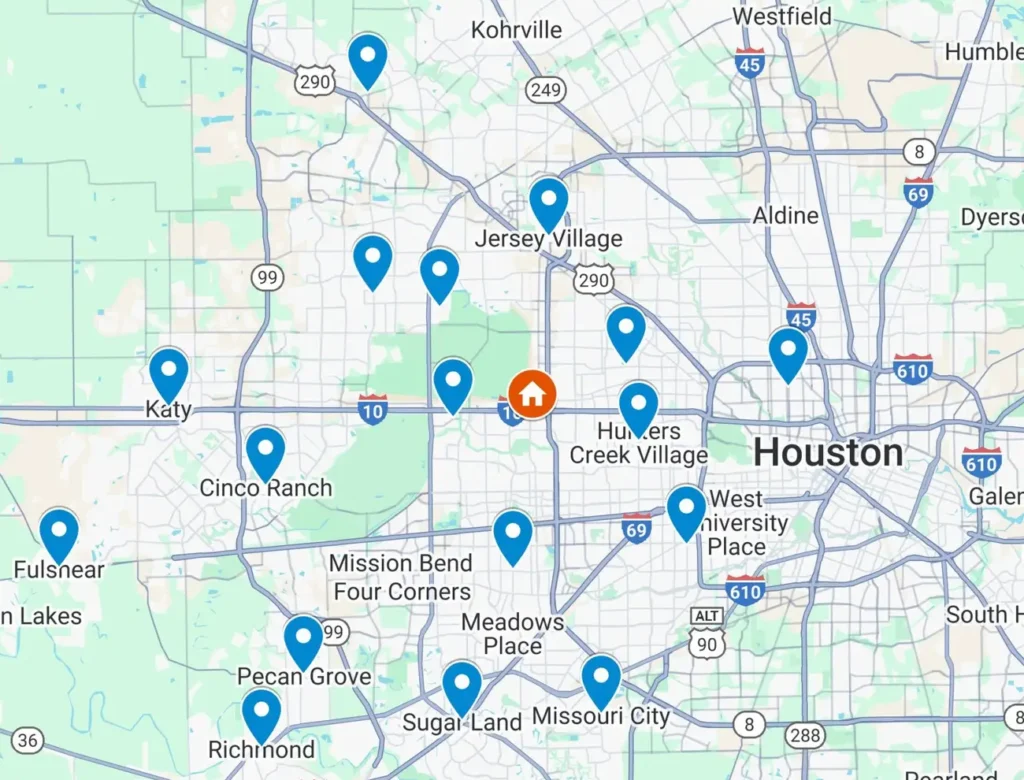
Modern Air of Katy is based in Spring Branch and provides residential AC diagnostics and repair throughout:
Spring Branch
Memorial
Briar Forest
Energy Corridor
Westchase
Spring Valley Village
Hedwig Village
Hunters Creek Village
Bunker Hill Village
Katy
We also serve Cypress, Sugar Land, and other nearby communities when scheduling permits.
Honest diagnostics and straightforward explanations
Repair recommendations without high-pressure sales
Upfront repair options before approved work begins
Service for most major residential HVAC brands
Local, family-owned company based in Spring Branch
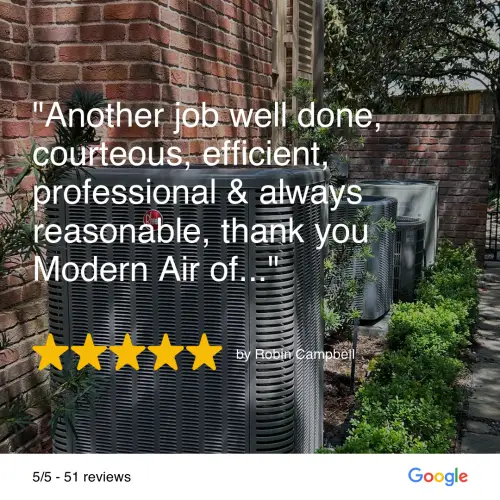
More than 140 five-star Google reviews
Licensed and insured Texas HVAC contractor
Texas contractor license TACLA30277E
An air conditioner that will not start may share symptoms with other cooling problems:
You do not need to diagnose the system yourself. Tell us what it is doing, and we will take it from there.
The thermostat may be sending a cooling request while an electrical, condensate-safety, control, capacitor, contactor, motor, or outdoor-unit problem prevents the equipment from starting. The indoor and outdoor components should be checked to determine where operation stops.
A blank thermostat may have depleted batteries, loss of equipment power, a tripped breaker, open service or door switch, blown low-voltage fuse, failed transformer, damaged wiring, or activated condensate safety switch.
Yes. Many systems use a float switch that interrupts cooling when water rises in the drain line or pan. The blockage and drainage problem should be corrected rather than bypassing the switch.
Clicking may indicate that a thermostat, relay, or contactor is attempting to start equipment that cannot operate. Possible causes include a failed capacitor, damaged contactor, motor problem, compressor issue, low voltage, or loose electrical connection.
You may reset a tripped breaker once. If it trips again, leave it off and arrange professional service. Repeated resets may damage equipment or create a safety hazard.
A dirty filter more commonly causes restricted airflow, poor cooling, or coil icing than a complete power loss. However, severe airflow problems may contribute to freezing, overheating, or protective shutdowns.
The indoor and outdoor equipment use separate components and may use separate electrical circuits. The outdoor unit may have a tripped breaker, failed capacitor, damaged contactor, motor problem, control issue, safety shutdown, or compressor failure.
Same-day appointments are often available depending on your location, technician and parts availability, current demand, weather, and the time you call. Some repairs require specialty components or additional work.
We service most major brands of residential central air conditioners, heat pumps, and related HVAC equipment. Contact us with questions about a particular brand or system type.
Not necessarily. Many startup problems can be repaired economically. Equipment age, failed component, repair history, overall condition, refrigerant type, warranty coverage, comfort performance, and likely remaining life should all be considered before replacement is recommended.
If your air conditioner will not turn on, Modern Air of Katy can identify where operation has stopped and explain the appropriate repair.
Call us for professional AC diagnostics throughout Spring Branch, Memorial, West Houston, Katy, and nearby communities.
Modern Air of Katy — Honest HVAC Service, Done Right
Texas HVAC Contractor License TACLA30277E